

Duplicate items in liquidation pallets can simplify listing and stocking—or leave a reseller with more of one model than their sales channels can absorb. The important question is not simply whether duplicates exist. It is what repeats, in what quantities, and with what differences in size, color, specifications, completeness and condition.
A liquidation pallet containing 200 units does not necessarily offer 200 different products. It might contain ten models, twenty variants and several condition groups. Evaluating those layers separately helps you understand assortment breadth before committing storage space and working capital.
PalletCove Liquidation supplies category-level liquidation pallets and full truckloads from Dallas, Texas. This guide explains how to assess repetition in inventory data, what to ask when details are missing, and how to reconcile the shipment after arrival. Start with the liquidation pallets hub when comparing available formats, but evaluate each lot on its own documentation.
What counts as a duplicate item?
A duplicate is another unit of the same identified product, but the grouping level matters. Two products can share a model family without being interchangeable for a buyer.
- Exact product duplicates: The same model, color, size, capacity, pack quantity and relevant specifications.
- Model-level repeats: The same base model with differences such as finish, storage capacity or size.
- Category repeats: Similar products, such as several different blenders, that are not duplicates.
- Condition-separated units: Identical products requiring different descriptions because their tested status, damage or included accessories differ.
Keep product identity separate from condition. Ten identical appliances remain ten units of one product variant even if some have damaged packaging or missing components. However, they may need separate resale inventory records.
Total unit count measures quantity. Assortment breadth measures distinct products or variants. Inventory depth measures units held within each product group. Define the grouping level before comparing loads.
A high piece count describes inventory volume, not product variety; count distinct models and variants separately.
Audit the manifest before counting the assortment
A manifest is an inventory record, not automatically proof of tested condition or an exact receiving count. Ask whether it describes the specific shipment, when it was prepared, and whether quantities are confirmed or estimated. A sample manifest cannot establish the composition of a different load.
Build a consistent product key
Preserve the original file and create a working copy. Useful fields include supplier SKU, UPC or GTIN, manufacturer model number, description, color, size, capacity, pack quantity, listed condition and quantity.
- Check the unit basis. Determine whether each quantity represents individual items, retail multipacks, cartons or cases.
- Normalize formatting. Trim extra spaces and standardize capitalization and common abbreviations. Store identifiers as text so leading zeros remain intact.
- Group by reliable identifiers. Use product identifiers alongside attributes; do not assume similar descriptions establish an exact match.
- Separate meaningful variants. Voltage, compatibility, size and pack quantity can change product identity even when names look alike.
- Flag uncertainty. Keep missing identifiers and conflicting attributes in an unresolved group rather than merging them automatically.
- Sum quantities. A spreadsheet pivot table can show total units by model, variant and condition group.
Check whether repeated rows are separate inventory entries or accidental duplicate records. Deleting identical-looking rows without investigation can undercount stock; summing duplicated exports can overcount it. Likewise, two supplier SKUs might refer to one product, while one generic SKU might cover several variants.
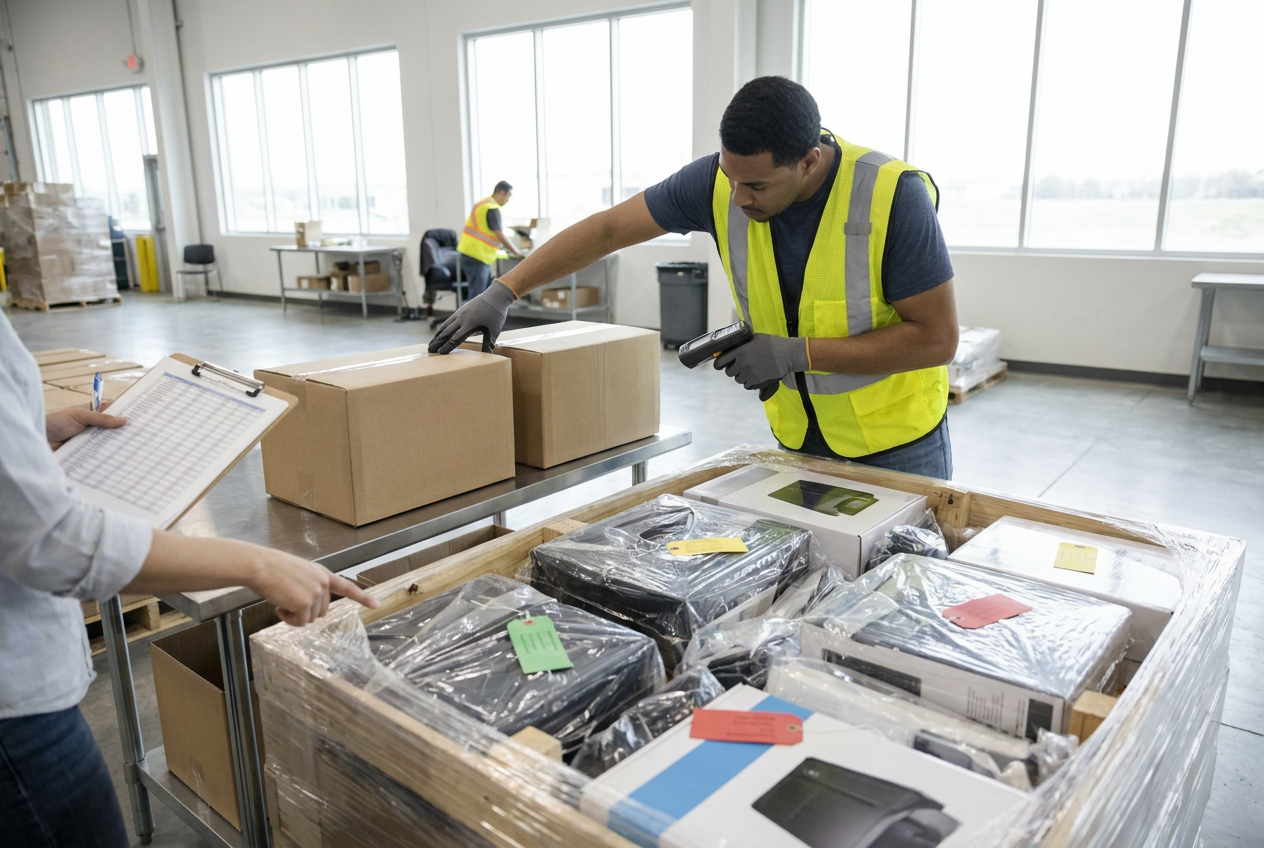
Measure breadth and concentration
The following fictional example illustrates the calculation, not a PalletCove inventory offer.
| Model | Variant | Units | Distinct variants |
|---|---|---|---|
| --- | --- | ---: | ---: |
| Bottle A | Blue, 24 oz | 40 | 1 |
| Bottle A | Black, 24 oz | 35 | 1 |
| Bottle A | Blue, 32 oz | 15 | 1 |
| Lamp B | White | 10 | 1 |
| Total | Two models | 100 | 4 |
This assortment contains 100 units, two models and four exact variants. Bottle A represents 90% of units, although its quantities are split across three variants. The largest exact-variant group represents 40%.
Useful calculations include:
- Average units per variant: Total units divided by distinct variants; here, 25.
- Largest-variant share: Units in the largest variant group divided by total units.
- Largest-model share: All units in the largest model family divided by total units.
- Unresolved quantity: Units whose identity or attributes remain unclear.
Averages can hide concentration. Always review the largest groups and disclose unresolved quantities separately. Count manifest rows only as rows—not as distinct products.
How load types and condition grades affect repetition
The guide to pallet types helps distinguish sourcing and format, while the truckload buying guide addresses larger commitments. Neither pallet count nor full-trailer size establishes variety.
A category-level pallet narrows the merchandise category, not necessarily the number of models. Mixed general merchandise can still contain substantial repeats. A truckload can repeat the same assortment across several pallets, so assess concentration across the entire load, not just one pallet.
Condition terminology also needs clarification:
- Overstock: Excess inventory that may include deep quantities of a limited assortment. The label alone does not establish packaging or working condition.
- Shelf pulls: Merchandise removed from selling displays or shelves; packaging, labels and handling wear can vary.
- Customer returns: Returned merchandise with potentially different reasons for return, completeness and functional status.
- Salvage: Merchandise potentially suitable for repair, parts or material recovery rather than ordinary ready-to-use resale.
Condition grades are not universally standardized. Ask what a grade means for the specific lot, whether testing occurred, and whether the description applies to every unit or the load overall. All PalletCove merchandise is sold as-is for resale.
Compare general merchandise inventory with truckload inventory, then inspect individual listings. For example, the 64 Oz Water Bottle Bulk listing warrants questions about color and pack breakdowns, while the Shoes Truckload listing warrants questions about styles, sizes and matched pairs. Product names alone do not establish current quantities, assortment or condition.
PalletCove is an independent reseller and is not affiliated with, endorsed by or sponsored by any retailer named.
Price the workload, not just the piece count
Duplicate stock can reduce photography and listing work when product identity and condition genuinely match. It can also require repeated testing, additional storage and longer exposure to demand for one model. Neither outcome establishes profitability.
Start with the listed lot price and the stated purchasing unit: pallet, bundle or truckload. Do not assume a per-piece calculation means individual pieces are available for purchase. Freight is included in PalletCove’s listed price.
Listed lot price ÷ stated units = nominal acquisition cost per stated unit.
That calculation is a planning reference, not a valuation of every item. It does not account for uncertain counts, incomplete units, testing, repairs, marketplace expenses, outbound packaging or your labor. Recalculate against the verified receiving count, while keeping unusable or unresolved units visible in your records.
For each large duplicate group, estimate storage needs, processing time and demand using your own sales history. Consider whether multiple colors appeal to distinct buyers or compete for the same demand. Review the liquidation pallet buying-limit guide for a broader budgeting framework.
Confirm the assortment before ordering and payment
Before placing an order, document the listing and clarify unanswered questions. Photographs can help, but a view of exposed cartons cannot establish the contents of an entire wrapped pallet.
Ask:
- Is a shipment-specific manifest available?
- Are quantities counted as individual items or packaged units?
- Which models and variants account for the largest quantities?
- Are photographs of this lot or representative inventory?
- What testing, completeness and condition information is available?
- What terms govern quantity discrepancies or a materially different shipment?
If no reliable breakdown exists, treat assortment breadth as unknown. Do not replace missing data with an assumed even mix. Confirm any stated assortment commitments in writing.
PalletCove accepts credit/debit card, ACH bank transfer and domestic bank wire. Consult the payment policy for applicable details. Handling begins after payment clears and takes 1–3 business days.
PalletCove covers sales tax on qualifying orders. Ask what documentation applies to your order; a resale certificate may be relevant to documenting resale status, but do not assume qualification without confirmation.
Plan free shipping and receiving capacity
Free shipping is PalletCove’s only delivery option on every order to all 48 contiguous states. Freight is included in the listed price. Transit from Dallas is typically 3–7 business days, following the 1–3-business-day handling period after payment clears; these are separate stages, not a guaranteed arrival date.
Pallet shipments may move by less-than-truckload service, or LTL, while larger shipments may require a full trailer. Confirm the shipment configuration, receiving requirements and unloading arrangements before dispatch. Review the shipping policy and ensure your receiving location can accommodate the shipment.
The same free-shipping scope applies to buyers exploring liquidation pallets in Texas and liquidation pallets in Florida.
Reserve space for sorting, unresolved inventory and condition-separated stock—not just intact pallets. Deep duplicate quantities are easier to count when each variant has a designated bin or shelf location.
Inspect delivery and document discrepancies
At arrival, compare the shipment identification and pallet or handling-unit count with the delivery paperwork. Photograph the load before removing wrap, including visible damage, labels and disturbed packaging. Where possible, record visible exceptions accurately on the delivery receipt and retain a copy; follow the applicable policy for reporting.
After unloading:
- Assign receiving IDs to pallets and cartons.
- Count merchandise using the manifest’s stated unit basis.
- Verify model, color, size and pack quantity against labels.
- Record condition, included accessories and testing status separately.
- Reconcile expected quantities with received quantities by product key.
- Preserve packaging and supporting records while any discrepancy is reviewed.
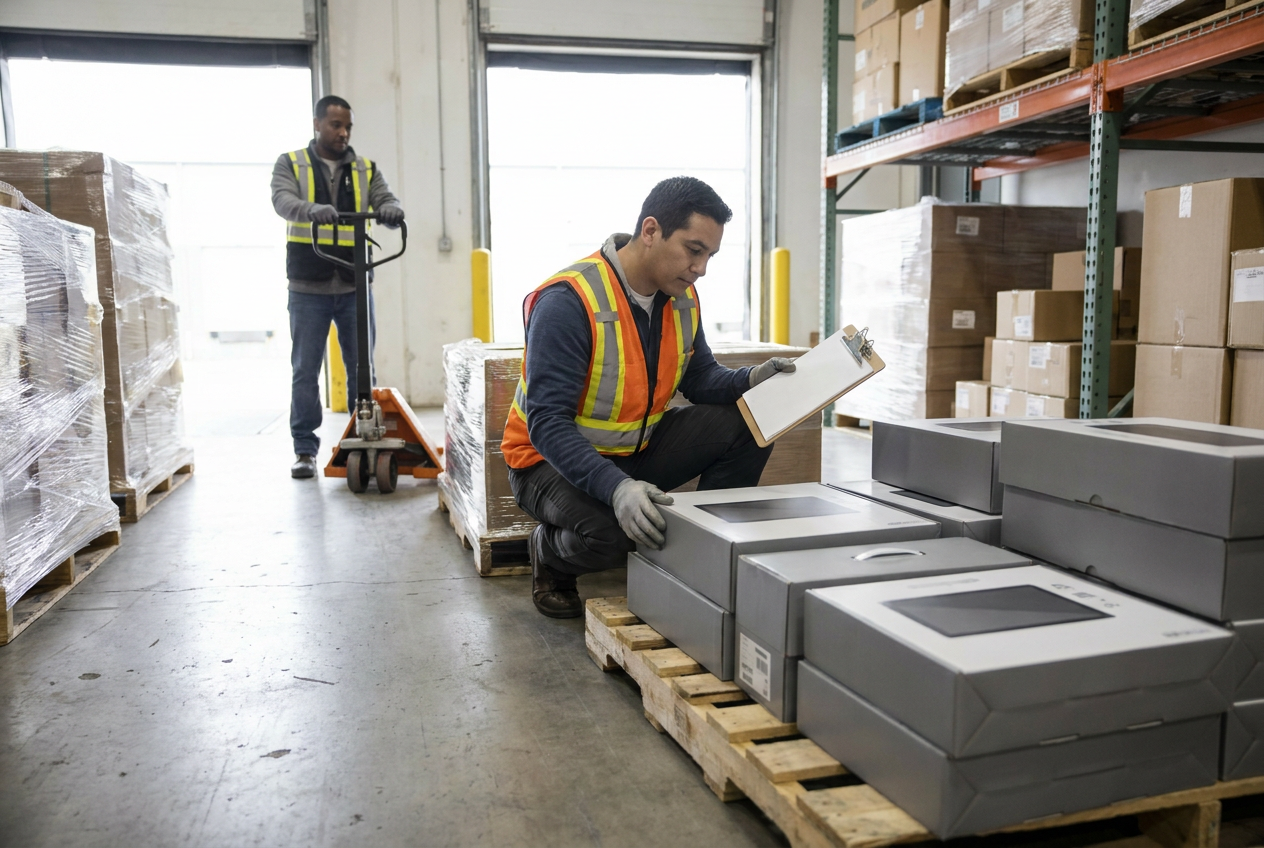
A wrong variant and a missing unit are different discrepancies. If a manifest lists ten blue units but you receive ten black ones, the total count matches while the assortment does not. Document both quantity and identity.
All merchandise is sold as-is for resale. Do not assume ordinary retail returns or a remedy simply because duplicates sell slowly. Review the refund and claims policy before ordering for eligibility, deadlines and required evidence. Report concerns promptly with the order number, affected identifiers, expected and received quantities, photographs and delivery records; documentation does not itself guarantee acceptance or reimbursement.
Common mistakes when assessing duplicate inventory
- Equating rows with variety: Multiple rows can describe one exact product.
- Ignoring multipacks: One retail package is not necessarily one individual item.
- Merging incompatible variants: Similar names can conceal different specifications.
- Extrapolating from visible stock: Top-layer cartons do not establish the entire mix.
- Assuming shared condition: Identical models can require different testing and disclosures.
- Ignoring cross-pallet repetition: Individually varied pallets may overlap heavily within a truckload.
- Treating repeat stock as automatically bad: Repetition can fit an established sales channel, but that fit requires evidence from your own operations.
Use one consistent product-key method from purchasing through receiving and resale. Changing definitions midway makes assortment comparisons unreliable.
Frequently asked questions
Does a high unit count mean a broad assortment?
No. A load with hundreds of units can contain only a few models. Calculate distinct models and variants separately from total units.
Are different colors duplicate items?
They are model-level repeats but separate color variants. Keep both grouping levels so you can assess overall model concentration and demand for each color.
Can a manifest guarantee the exact duplicate mix?
Do not assume that it does. Ask whether the manifest is shipment-specific and what the listing terms say about count and assortment accuracy; verify the received inventory afterward.
Can duplicate items share one resale listing?
They may when product identity, condition and included contents match and the marketplace permits it. Units with different damage, testing status or missing accessories need accurate individual descriptions or appropriate condition groupings.
Can I return a pallet because it has too many repeats?
Do not assume repetition alone creates return eligibility. PalletCove merchandise is sold as-is for resale, and any concern must be assessed under the applicable listing terms and refund policy.
Talk to PalletCove Liquidation
Before ordering, identify your acceptable model concentration, required variant detail and receiving capacity. Then contact our order desk with questions about a specific listing or review current inventory.
PalletCove Liquidation LLC
4820 Cove Industrial Blvd, Dallas, TX 75236
Phone: (713) 819-3904
Email: sales@palletcoveliquidation.com
Hours: Mon–Fri 8:00 AM – 6:00 PM CT, Sat 9:00 AM – 2:00 PM CT, Sun closed.