
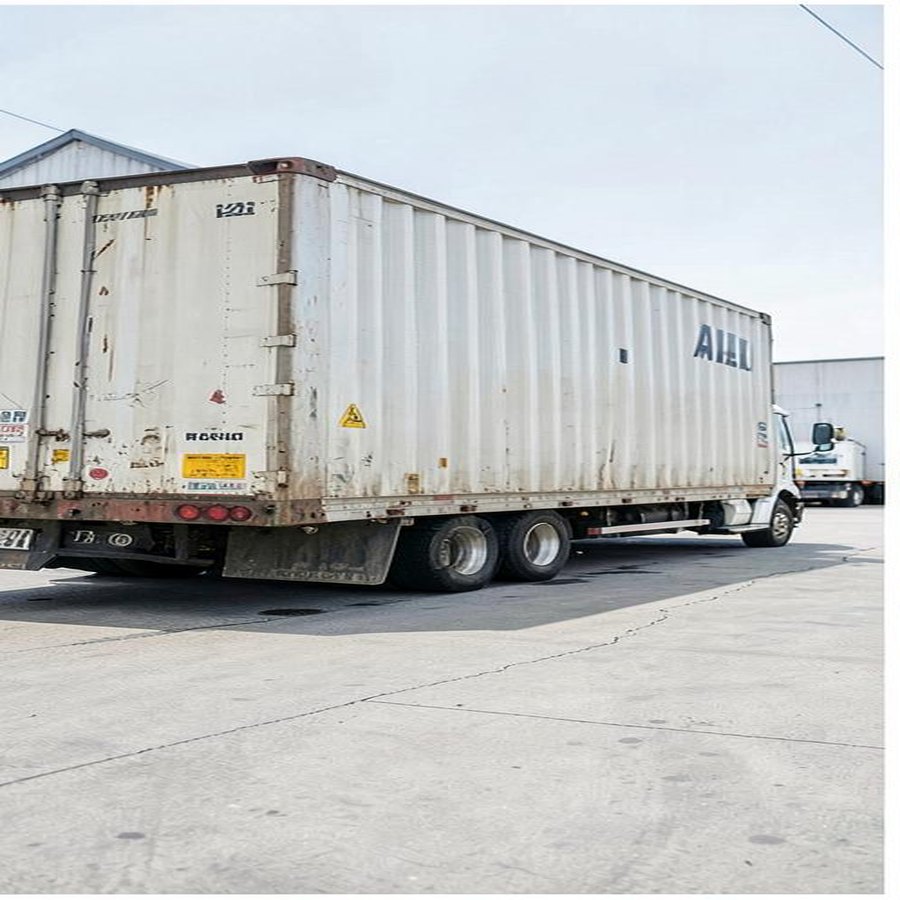
Shopping for liquidation truckloads for sale starts with a practical question: what will actually arrive? A full trailer describes the shipment format, not a universal pallet count, piece count, or merchandise mix. Two loads can occupy similar trailer space while requiring very different amounts of sorting, storage, testing, and listing work.
PalletCove Liquidation is an independent wholesale liquidation supplier in Dallas, Texas, selling manifested and category-level liquidation pallets and full truckloads to independent resellers. The useful way to evaluate a load is to separate four things: its physical footprint, the detail available about its contents, its stated condition, and the work required after delivery.
This guide explains those distinctions and turns them into a receiving plan. Before comparing available truckloads, decide what your operation can unload, document, and process—not simply what it can fit through the door.
1. What a Full Trailer Really Means
A truckload is a shipment organized around a trailer rather than an individual pallet. It does not automatically mean that every shipment contains the same number of pallets or that every cubic foot is occupied. Weight, product dimensions, packaging, and loading method all influence the final configuration.
Pallet positions are not a promised pallet count
As a general warehouse planning reference, a common 53-foot dry van can accommodate roughly 26 standard 48-by-40-inch pallets in a conventional, single-layer arrangement. That is not a PalletCove load specification. Actual counts depend on the trailer, pallet orientation, overhang, weight distribution, and whether the merchandise can be stacked safely.
Oversized goods can reduce the number of usable positions. Smaller packages may produce a high piece count without increasing the number of pallets. Floor-loaded merchandise, if specified for a shipment, requires a different receiving approach because cartons are not already grouped on movable pallets.
Before purchasing, establish:
- Whether the shipment is palletized, floor-loaded, or a combination.
- The listed pallet count and whether it is exact or approximate.
- Whether the item count refers to individual units, cartons, cases, or sets.
- Whether dimensions or unusual handling requirements are disclosed.
- Whether the listing describes the specific available load or a broader load program.
The truckload buying guide is a useful companion when moving from pallet purchases to larger shipments.
2. Read Counts as Separate Measurements
Pallet count, carton count, and unit count answer different questions. Pallets help estimate floor space and unloading movements. Cartons help estimate handling work. Units help estimate the number of products requiring identification, evaluation, and inventory records.
| Measurement | What it helps you plan | What it does not establish |
|---|---|---|
| --- | --- | --- |
| Pallet count | Receiving space and equipment movements | Number of sellable items |
| Carton or case count | Opening, sorting, and handling workload | Individual unit quantity unless pack size is clear |
| Piece or unit count | Inventory intake and inspection volume | Completeness, function, or resale outcome |
| Product dimensions | Storage layout and handling needs | Condition of the merchandise |
| Category breakdown | Sorting stations and sales-channel fit | Exact models unless individually identified |
For example, 100 cartons could contain 100 large products or multiple smaller units per carton. Neither interpretation is safe without a stated pack quantity. A furniture component may also be counted separately from the other components needed to assemble a complete item.
Ask how sets, multipacks, and component cartons are counted. This matters especially when comparing loads that appear similar by quantity but differ in product size or packaging. Understanding the different types of liquidation pallets also helps explain why pallet count alone is a weak comparison tool.
A truckload count describes shipment scale. The manifest, condition description, and receiving plan determine how well you understand the work ahead.
3. What Category-Level Manifests Can Tell You
A manifest is a record describing merchandise in a shipment. Its usefulness depends on its level of detail, the meaning of its fields, and whether it applies to the specific load being offered. The word “manifested” should not be treated as a substitute for reading the document.
Item-level detail versus category-level detail
An item-level manifest may identify individual products through descriptions, model numbers, SKUs, or UPCs, alongside quantities. A category-level manifest groups merchandise into broader buckets, such as housewares, tools, apparel, or small appliances. It can help you plan departments and labor without identifying every product.
For a general merchandise load, a category breakdown may reveal the need for several sorting zones. An item-level list may support more detailed research, but it still does not independently establish functionality or completeness.
Questions worth resolving before payment
- Does the manifest correspond to this particular shipment?
- Are quantities exact, estimated, or subject to a stated tolerance?
- Are condition descriptions attached to individual lines or the load overall?
- Do repeated descriptions represent identical products or a broad grouping?
- Are accessories, sets, and replacement components identified separately?
- Are photographs of the actual load or representative examples?
Do not use blank fields as evidence of favorable condition. If a spreadsheet includes retail-reference figures, those figures do not establish current selling prices or what you will recover. Request clarification through PalletCove’s contact page when a material detail is unclear.
4. Condition Grades Describe Categories, Not Certainty
Liquidation condition terminology is not standardized across all suppliers. “Grade A,” “Tier 2,” or similar labels only become useful when the listing explains what they mean. Do not assume that a grade used for one source or category means the same thing elsewhere.
Common industry descriptions include:
- Overstock: excess inventory that may still have packaging wear, aging, or storage-related issues.
- Customer returns: merchandise returned for varied reasons, potentially including defects, missing parts, or buyer preference.
- Shelf pulls: products removed from a selling floor, potentially carrying stickers, handling wear, or packaging damage.
- Salvage: merchandise that may require repair, parts recovery, or another appropriate disposition rather than ordinary retail resale.
These are general descriptions, not guarantees about a particular PalletCove shipment. “Untested” means that verified functionality has not been established by that description. “Open box” does not, by itself, establish whether an item has been used or includes every accessory.
All PalletCove merchandise is sold as-is for resale. Read the specific listing and the terms of service, and review the warranty policy rather than assuming a condition label creates warranty coverage.
Retailer names can identify a described merchandise source; they do not mean the retailer inspected or guaranteed your shipment. PalletCove is an independent reseller and is not affiliated with, endorsed by, or sponsored by any retailer named.
5. Match the Load to Your Processing Capacity
The trailer is only the beginning of the inventory cycle. Merchandise must move through receiving, sorting, inspection, any appropriate testing, photography, storage, and sale preparation. A load can fit inside your building while exceeding your ability to process it.
Plan for the work each category creates
Tools may need model identification and accessory checks. Textiles may require size sorting and package inspection. Small appliances may require safe functional evaluation by qualified staff. Mixed general merchandise can require several workflows at once.
Estimate your capacity using your own records:
- How many units can your team identify and inspect per shift?
- How much staging space remains after the shipment arrives?
- Where will incomplete, damaged, or unidentified items go?
- Can your sales channels accommodate bulky or specialized products?
- How will packaging materials and unsellable goods be managed responsibly?
Build a purchase budget around actual operating expenses, including labor, storage, supplies, testing resources, and disposal where necessary. Freight is included in PalletCove’s listed price. Do not convert a manifest’s retail-reference total into a profit forecast; actual outcomes depend on the merchandise received and your operating circumstances.
6. Understand Delivery Timing and Order Terms
PalletCove’s only delivery option is free shipping on every order to all 48 contiguous states. Freight is included in the listed price. This makes the listed amount easier to evaluate, but you still need a receiving location and unloading arrangement suitable for the shipment.
Handling takes 1–3 business days after payment clears. Transit is typically 3–7 business days from Dallas. These are separate stages: placing an order is not the same as payment clearing, and the handling period comes before transit. Use the stated ranges for planning rather than treating them as a guaranteed arrival date.
Before committing your crew, confirm the delivery coordination process and review the shipping policy. Explain any site constraints early, including restricted hours, limited turning space, or lack of dock access. Do not assume the arriving trailer or driver can accommodate an unloading method you have not confirmed.
Accepted payment methods are credit/debit card, ACH bank transfer, and domestic bank wire. See the payment policy for the applicable process. PalletCove covers sales tax on qualifying orders; review the sales tax policy to understand qualification.
7. Prepare the Unload Before the Trailer Arrives
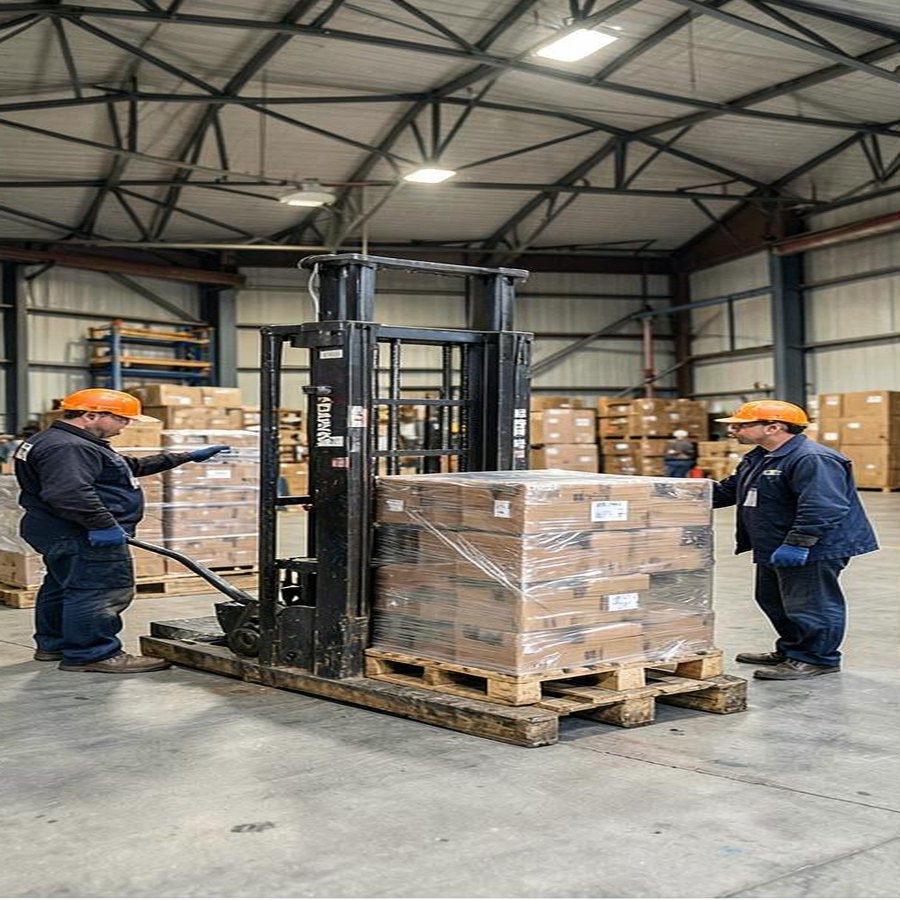
A safe unload depends on the shipment configuration, the site, and trained personnel. A pallet jack moves suitable pallets on appropriate surfaces; it is not a universal solution for getting merchandise from trailer height to ground level.

Receiving checklist
- Confirm access. Check the approach, turning area, overhead clearance, parking position, and delivery-hour restrictions.
- Match equipment to the load. Verify suitable rated capacity, fork reach, dock compatibility, and trained operators where powered equipment is needed.
- Clear staging zones. Separate incoming inventory from inspected stock and customer-ready merchandise.
- Assign roles. Designate people for unloading, counting, documenting, and directing inventory to its staging area.
- Prepare supplies. Have labels, markers, cameras, cutting tools, protective equipment, and inventory forms ready.
- Establish a stop-work rule. Shifted freight, unstable stacks, or damaged pallets should be assessed before handling continues.
Do not estimate unloading labor from pallet count alone. Loose cartons, mixed pallet sizes, damaged packaging, and oversized products can change the work substantially. Keep pedestrians clear of equipment routes and follow your facility’s safety procedures.
8. Document Receipt and Start a Controlled Intake
Receiving documentation creates a useful record of what arrived. Before breaking down the load, photograph visible packaging conditions and count the handling units you can verify. Follow the carrier’s process for recording visible discrepancies on delivery paperwork, and retain copies.
Then reconcile the merchandise against the available manifest at its stated level of detail. A category-level manifest supports a category-level comparison; it cannot support an exact model-by-model reconciliation when models were never listed.
Assign internal locations or pallet identifiers, separate incomplete and potentially unsafe items, and avoid listing products as functional before you have an appropriate basis for that description. Check applicable recalls and sales-channel restrictions before offering affected goods for resale.
If something needs clarification, preserve the listing, manifest, photos, and delivery records and contact PalletCove promptly. Documentation does not change the as-is sale terms or guarantee a remedy; consult the refund policy for applicable terms.
The best way to compare liquidation truckloads for sale is to connect the description to a real operating plan. Review the current inventory, verify what the counts and condition labels mean, and prepare enough space, equipment, and labor to receive the shipment safely.