
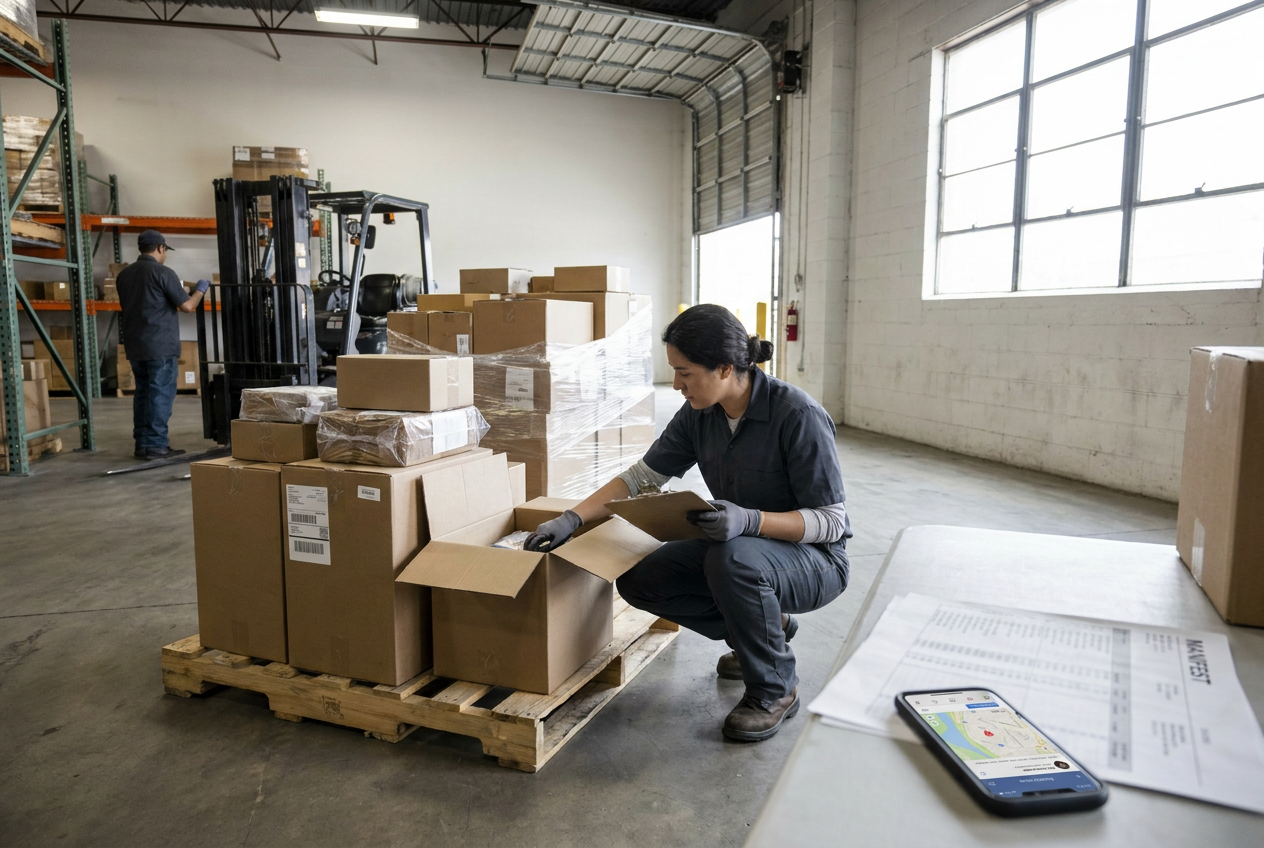
Selling liquidation on Facebook Marketplace starts well before you publish a listing. A reseller needs to identify each item, check whether it can legally and safely be sold, document its actual condition and decide how a local buyer will inspect and collect it. A supplier’s inventory description is a starting point—not a substitute for examining individual merchandise.
Local selling can suit bulky household goods, tools and other products buyers want to see before collecting. However, messages, testing, storage and missed appointments all consume time. A workable process connects purchasing decisions to the space, equipment and attention you can realistically provide.
This guide separates two transactions: buying wholesale inventory from PalletCove Liquidation and reselling individual items to your own Marketplace customers. PalletCove orders ship free; the local pickup procedures below concern your subsequent resale transactions, not collection of wholesale orders from PalletCove.
Choose inventory you can inspect and sell locally
Liquidation is inventory sold outside its original retail channel, often because it is excess stock, returned merchandise or discontinued inventory. A liquidation pallet groups merchandise on a pallet; a truckload is a larger shipment whose packing and quantity must be verified in the specific listing. A full trailer may contain palletized or floor-loaded goods.
Start with the liquidation pallets hub, then use the guide to liquidation pallet types and truckload buying guide to compare sourcing formats. Choose volume based on inspection capacity and storage, not just available cash.
| Inventory description | What it generally means | What the reseller must verify |
|---|---|---|
| --- | --- | --- |
| Overstock | Excess inventory that did not sell through the original channel | Packaging, completeness, age and actual condition |
| Shelf pulls | Goods removed from retail display or shelves | Wear, labels, handling damage and missing accessories |
| Customer returns | Merchandise previously returned by customers | Function, use, missing parts and reasons for return when known |
| Salvage | Inventory intended for repair, parts or material recovery | Safety, repair feasibility and whether resale is permitted |
| Condition grade | A supplier’s classification of merchandise | The supplier’s definition and each item’s actual state |
Grades are not universal. A number or tier in a product title does not independently establish functionality. A manifest may list descriptions, quantities, identifiers and reference values, but it does not prove that every item works or that reference values reflect current local demand. Ask whether the manifest is final, estimated or unavailable, and what the listing says about discrepancies.
Compare general merchandise inventory with available truckload categories. Product pages such as the Amazon General Merchandise Truckload and Macy’s Textile Truckload are places to review specific descriptions—not evidence of guaranteed contents or condition. PalletCove is an independent reseller and is not affiliated with, endorsed by or sponsored by any retailer named.
Order with the complete inbound process in mind
Before ordering, confirm the listed load format, merchandise category, manifest availability, condition description and receiving requirements. Save the product description and order confirmation so you can compare what was represented with what arrives. All PalletCove merchandise is sold as-is for resale.
PalletCove’s listed price includes freight. Free shipping is the only delivery option on every order to all 48 contiguous states. This applies whether you are researching liquidation pallets in Texas or liquidation pallets in Florida.
Accepted payment methods are credit/debit card, ACH bank transfer and domestic bank wire. Handling takes 1–3 business days after payment clears; transit is typically 3–7 business days from Dallas. These are separate periods, and typical transit is not a guaranteed arrival date.
Sales tax on qualifying orders is covered by PalletCove. Ask which qualifications and documentation apply; maintain your resale certificate where required for your business. Your own downstream sales-tax obligations are separate from PalletCove’s treatment of its orders.
Review the free shipping and delivery policy before purchase. Confirm whether the shipment will use LTL—less-than-truckload transportation—or a full trailer, and establish suitable receiving access, equipment and labor before dispatch.
Inspect deliveries before creating listings
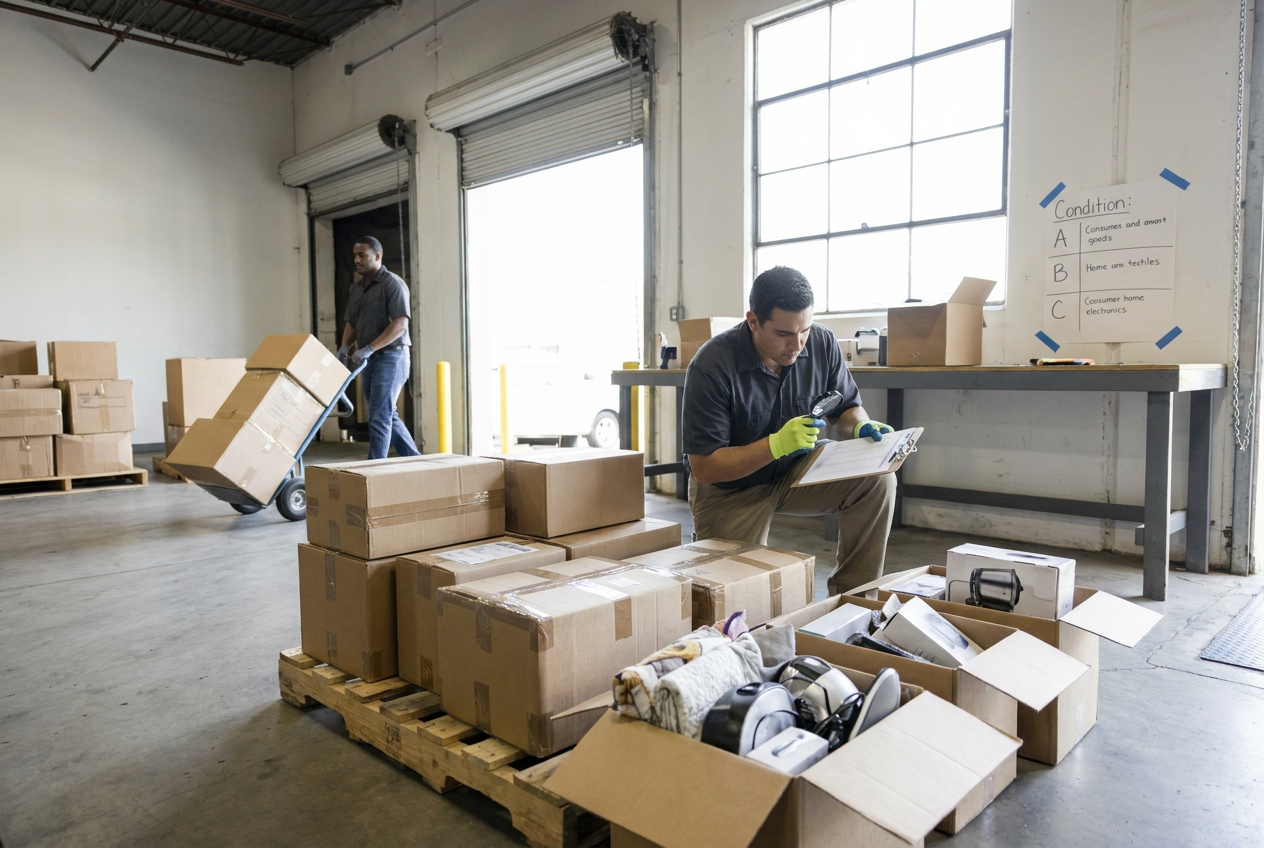
On delivery day, compare the shipment identifiers and accessible pallet or package counts with the transport paperwork. Photograph the shipment before disturbing the wrapping, including labels and visible damage. Record observable exceptions accurately on delivery documents when possible; do not describe concealed contents as inspected if you have not examined them.
Unpack systematically:
- Assign each item a stock number tied to the purchase lot.
- Record model numbers, accessories and visible condition.
- Separate untested goods from tested items and incomplete units.
- Isolate anything recalled, hazardous or potentially contaminated.
- Compare quantities and identities with the applicable manifest.
- Retain packaging, photographs and paperwork needed for a possible claim.
Do not energize damaged electrical equipment merely to see whether it works. Use qualified help where testing requires specialist knowledge. For connected devices, remove prior-user information through an appropriate reset process and verify account locks before offering them for sale.
Check current Facebook Marketplace rules before posting
Meta’s rules and available Marketplace features can change by location, account and transaction type. Treat policy checking as a publishing step, not a one-time task. This article is not confirmation of live platform eligibility or account access.
In Facebook’s current Help Center and policy pages, review Meta Commerce Policies, Marketplace access requirements, applicable Community Standards and any rules governing your chosen transaction features. If you cross-post to a local group, check its rules separately. Do not assume a category is allowed because similar listings are visible.
Screen every item for:
- Prohibited or restricted categories: Check rules affecting weapons, alcohol, tobacco, drugs, medical products, animals and other regulated goods.
- Recalls and safety: Search the relevant manufacturer and government recall resources by model or identifier. In the United States, selling recalled consumer products is illegal.
- Authenticity: Do not sell counterfeit goods or make unsupported authenticity claims. Retailer labels alone are not sufficient verification.
- Misleading presentation: Show the actual product, price and condition. Do not advertise a working unit when the item offered is incomplete or untested.
- Feature-specific requirements: Verify whether the transaction qualifies for any checkout, shipping or protection features before mentioning them.
An as-is statement does not make prohibited merchandise permissible. Nor does it remove disclosure duties or consumer rights that apply under law.
The most important listing rule is simple: describe the item you inspected, not the condition you hoped the pallet would contain.
Prepare listings that answer buyer questions
Clean items appropriately without concealing defects, altering identifiers or removing safety labels. Use a plain background and photograph the actual item from several angles. Include close-ups of wear, controls, included accessories and model labels, while keeping personal information out of the images.
Use a title built around product identity and a meaningful condition detail: “Six-drawer dresser, assembled, scratched side panel.” Avoid unsupported words such as “perfect,” “certified” or “fully refurbished.” Open packaging does not by itself establish whether an item is unused.
A useful description follows a repeatable structure:
- Identity: Brand, model, size, dimensions and relevant compatibility.
- Testing: Exactly what you checked and what remains untested.
- Condition: Scratches, stains, damage, odors or missing components.
- Included contents: List accessories instead of relying on photographs alone.
- Collection details: General pickup area, access limitations and appointment requirements.
- Sale terms: Your actual inspection and return terms, subject to law and applicable platform rules.
For example: “Desk fan, model shown in photos. Operated for ten minutes; all three speed settings and oscillation responded. Long-term operation not tested. Scuff on base shown in photo four. Fan only; original box and instructions missing.”
Do not turn a brief power-on check into a durability claim. Disclose repairs you performed and known faults even when you believe the asking price already reflects them.
Price from costs and evidence, not manifest retail
Your listed wholesale purchase price includes freight, but resale still creates costs. Allocate the purchase cost consistently across inventory, then track testing supplies, replacement parts, cleaning, storage, listing time and any applicable selling expenses. The inventory holding-cost guide explains why unsold stock deserves attention.
One method is equal cost allocation across received units; another weights units by documented relative value. Neither makes unsellable stock disappear. Record write-offs and avoid evaluating a purchase only by its best items.
Compare local listings for the same model, condition and included accessories. Asking prices are not confirmed sale prices. Where reliable completed-sale information is available, consider it alongside differences in location, collection convenience and condition.
Set an asking price, a negotiation threshold and a review date. Use a real price rather than a misleading placeholder. If selling a bundle, identify every included item and disclose whether individual pieces are available separately. No liquidation purchase guarantees profit, resale value or a particular sell-through rate.
Handle messages and pickups consistently
Keep initial communication in Marketplace messaging. Answer questions directly and preserve written disclosures so buyers can review them before traveling. A simple reply can confirm availability, restate a material defect and offer two appointment windows.
For local pickup, establish a repeatable process:
- Confirm the exact item, agreed price and proposed collection window.
- Share the general area first; provide a precise location only when necessary.
- Explain dimensions, stairs, loading access and who must provide lifting help.
- State whether a safe demonstration is available and what it includes.
- Ask the buyer to reconfirm before departing.
- Allow inspection, complete payment verification and record the handover.
For portable goods, consider a staffed public meeting place or designated exchange area, checking its hours and rules first. For large inventory, use a controlled collection area rather than allowing strangers into unrestricted storage or living space.
Never share verification codes. Treat overpayment requests, links demanding account credentials and screenshots offered as payment proof cautiously. Verify receipt through the actual service used for your resale transaction before releasing goods; PalletCove’s wholesale payment methods do not determine your separate buyer arrangements.
Separate supplier claims from buyer complaints
PalletCove sells merchandise as-is for resale. Do not assume retail-style returns, a warranty or an automatic allowance for defective inventory. Read the returns and claims policy before ordering and verify applicable eligibility, reporting deadlines and documentation requirements without assuming coverage.
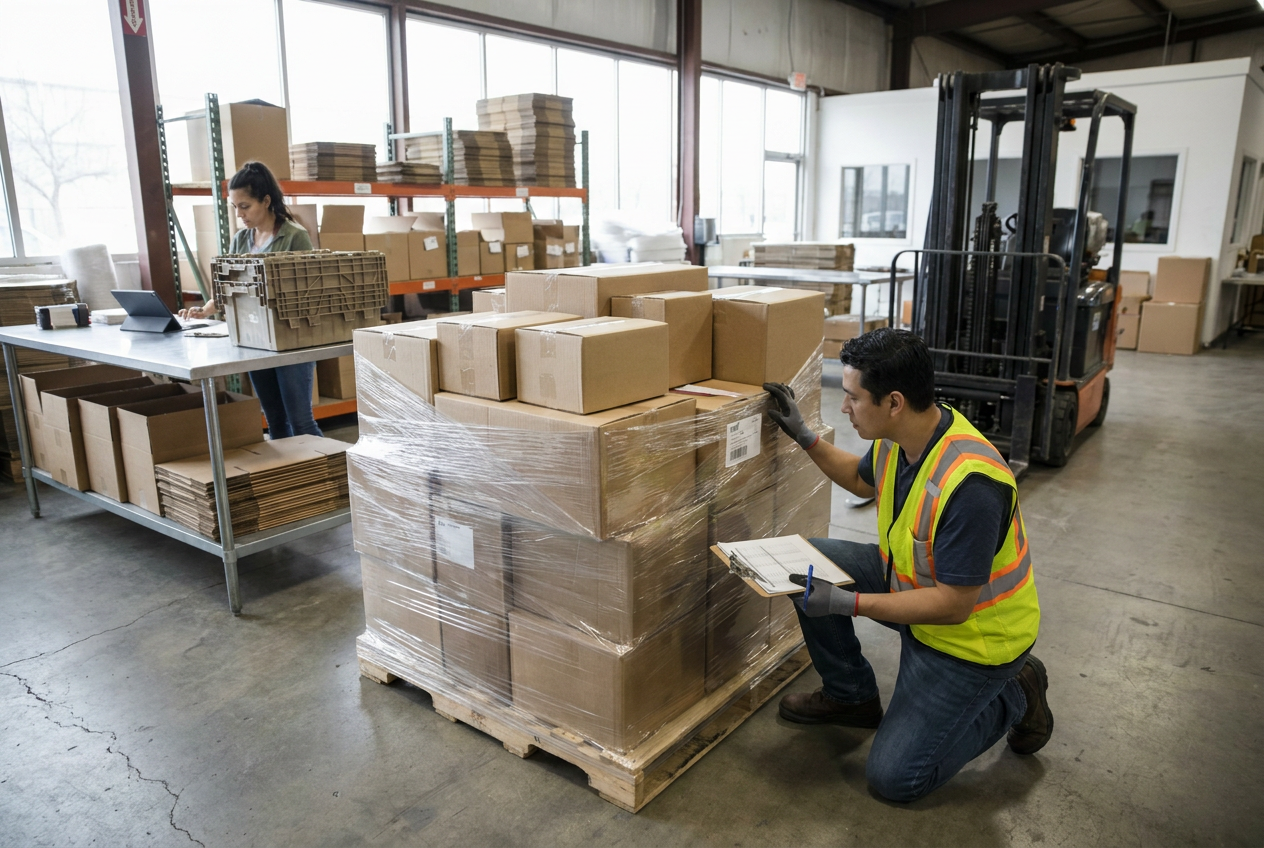
If an inbound shipment presents a potential issue, preserve evidence and report specific facts promptly: order number, affected items, photographs and the difference between the listing and what arrived. Recording transport damage is useful evidence, not a guarantee of reimbursement.
For your own Marketplace customers, state your terms before the appointment and handle complaints against the listing, message history and applicable law. Supplier as-is terms do not automatically resolve a dispute between you and your buyer.
Common mistakes include listing before inspection, treating a manifest as a warranty, hiding missing accessories, promising unverified functionality and accepting more appointments than you can manage. Also avoid advertising protection you have not verified or assuming a “no returns” statement defeats every legal obligation.
Frequently asked questions
Can I sell customer returns on Facebook Marketplace?
Potentially, if the individual product is legal, safe and permitted under current platform rules. Inspect it and disclose known use, defects, missing parts and testing limitations; “customer return” alone is not a useful condition description.
Can I describe liquidation merchandise as new?
Only when you can substantiate that description and it matches the platform’s current condition definitions. Overstock status, sealed-looking packaging or a supplier grade does not independently prove an individual item is new.
Should I start with a pallet or a truckload?
Choose the quantity you can receive, inspect, store and list without creating an unmanaged backlog. A truckload requires substantially more receiving and processing capacity, while even a single pallet can contain items needing different testing procedures.
Does PalletCove offer pickup instead of shipping?
No. Free shipping is the only delivery option on every PalletCove order to all 48 contiguous states, with freight included in the listed price. Local pickup in this guide refers to your own Marketplace customers collecting resale items.
Are local Marketplace transactions automatically protected?
Do not assume they are. Check Meta’s current protection terms for the specific transaction type and features used, and never promise coverage without verifying eligibility.
Talk to PalletCove Liquidation
Discuss load descriptions, manifest availability and receiving preparations before choosing inventory. PalletCove Liquidation LLC sells category-level liquidation pallets and full truckloads as-is for resale, without guaranteed conditions or resale outcomes.
- Address: 4820 Cove Industrial Blvd, Dallas, TX 75236
- Phone: (713) 819-3904
- Email: sales@palletcoveliquidation.com
- Hours: Mon–Fri 8:00 AM – 6:00 PM CT, Sat 9:00 AM – 2:00 PM CT, Sun closed
For help matching an order to your operating capacity, contact our order desk or review current inventory.