
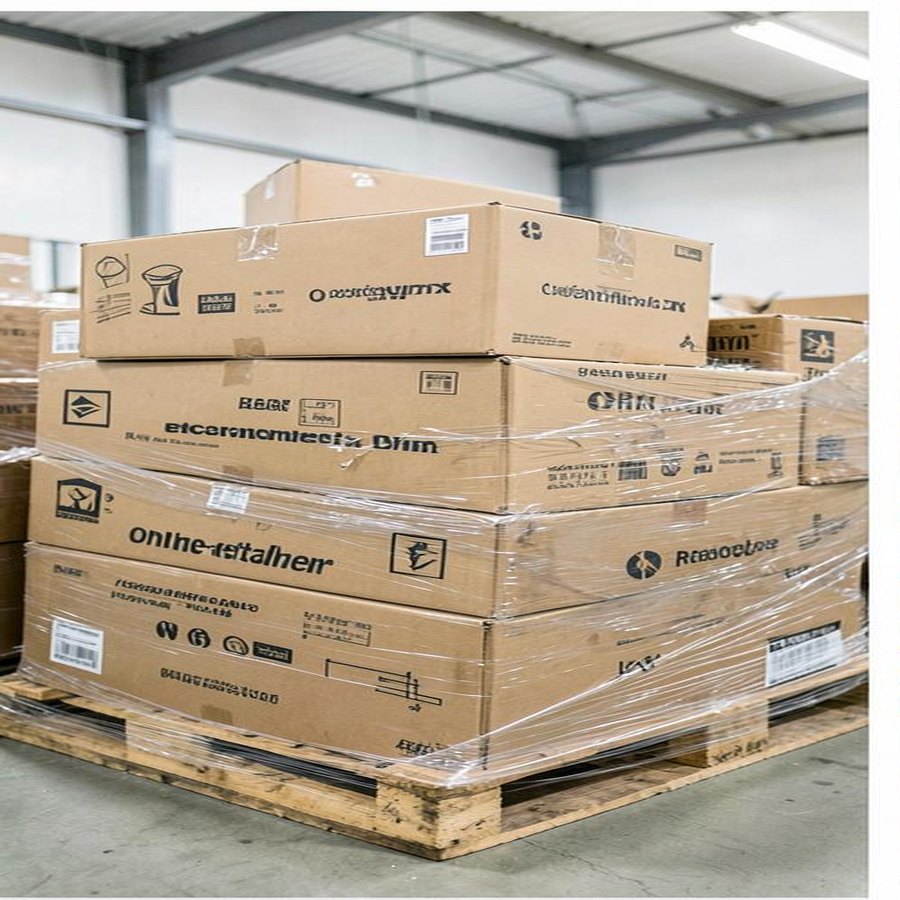
Amazon return pallets are bulk inventory, not a shortcut to predictable resale results. A load can contain useful merchandise alongside incomplete, damaged, untested or unsellable items. The buying decision starts with understanding what the listing documents—and what it leaves uncertain.
For an independent reseller, the important questions are practical: What merchandise is included? How was its condition described? How much processing will it need? What does each usable unit actually cost? A low average acquisition cost means little if the load exceeds your testing capacity or storage space.
PalletCove Liquidation sells manifested and category-level liquidation pallets and full truckloads from Dallas, Texas. All merchandise is sold as-is for resale. PalletCove is an independent reseller and is not affiliated with, endorsed by or sponsored by Amazon or any other retailer named.
1. Understand what kind of load you are buying
A liquidation pallet is merchandise consolidated onto a pallet for bulk sale and transport. An Amazon return pallet generally refers to inventory described as originating from Amazon-related customer returns; the exact source, contents and condition must come from the individual listing, not the name alone.
Liquidation inventory can include several streams:
- Customer returns: Merchandise sent back by purchasers for reasons that may include defects, fit, preference or delivery damage.
- Overstock: Excess inventory that did not sell through its original channel; packaging and condition still require verification.
- Shelf pulls: Items removed from selling stock, potentially carrying labels, handling wear or damaged packaging.
- Salvage: Merchandise intended primarily for repair, parts recovery or other limited uses rather than ordinary ready-to-sell inventory.
A manifested load includes an itemized inventory record. A category-level load is described primarily by its merchandise category or assortment, without necessarily identifying every unit. Neither format establishes working condition by itself.
Start with the liquidation inventory overview and guide to liquidation pallet types if these distinctions are new. They matter more than a familiar retailer name.
2. Interpret condition grades without assuming a standard
Condition grades are shorthand, not universal specifications. Terms such as “A grade,” “B grade” and “untested” can mean different things across suppliers. Ask for the definition applied to the specific load and whether it describes individual items or the assortment overall.
| Listing description | What it may indicate | What to verify |
|---|---|---|
| --- | --- | --- |
| Overstock | Excess selling inventory | Packaging condition, age and storage exposure |
| Shelf pulls | Inventory removed from shelves | Tags, display use and handling damage |
| Customer returns | Merchandise returned after purchase | Testing status, completeness and mixed conditions |
| Open box | Opened or replaced packaging | Whether the item was used, tested or checked for accessories |
| Untested | Functionality has not been verified | Whether any visual or completeness checks occurred |
| Salvage | Repair, parts or recovery inventory | Defects, handling requirements and disposal needs |
An unopened-looking carton does not establish that an item is new. Likewise, a return reason is not a diagnostic report. “Does not work” may describe a genuine failure, while “changed mind” does not establish completeness.
Separate cosmetic condition, functionality, accessory completeness and packaging condition. An appliance can power on but lack a necessary component; an electronic device can look clean but be account-locked.
Read the load as a set of documented facts and unresolved risks—not as a collection of assumed ready-to-sell products.
3. Read the manifest line by line
A manifest helps you identify merchandise and quantities, but its usefulness depends on its detail and limitations. Confirm that it applies to the exact lot being offered, and ask whether counts are verified, estimated or subject to stated variances.

Review these fields when available:
- Product description and model: Distinguish similar-looking products with different specifications.
- UPC, SKU or other identifier: Check that identifiers match the described merchandise.
- Quantity and unit of measure: Determine whether a “unit” is a single item, multipack, case or component.
- Condition and testing notes: Separate verified observations from broad lot descriptions.
- Accessories and completeness: Look for missing chargers, remotes, hardware or other essential parts.
- Reference retail figures: Treat these as reference data, not expected selling prices or resale value.
- Pallet count, dimensions and weight: Use these for storage and receiving planning, not as substitutes for piece counts.
Reconcile the line-item quantities with the stated total. Watch for duplicate lines, vague descriptions and large quantities concentrated in a few products. A high piece count may reflect many small items rather than a broad assortment.
For your own demand research, compare exact models, conditions and included accessories with recent completed sales where available. Asking prices alone do not establish demand. Check selling restrictions, recalls, expiration dates and any product-specific compliance requirements.
If no itemized manifest is provided, ask what category information, lot-specific photographs and condition notes are available. Uncertainty should influence your budget and buying decision; it should not be filled with optimistic assumptions.
4. Calculate costs beyond the headline price
At PalletCove, freight is included in the listed price. Free shipping is the only delivery option on every order to all 48 contiguous states. PalletCove also covers sales tax on qualifying orders; review the sales tax policy for qualifying purchases and confirm any documentation requirements.
Your basic calculation is:
Average acquisition cost per listed unit = listed load price ÷ listed unit count.
That is not the same as cost per sellable unit. A more useful operational calculation includes processing and excludes inventory that cannot be sold through your intended channels.
Consider this hypothetical planning example—not a PalletCove offer or an expected outcome:
| Planning input | Example |
|---|---|
| --- | ---: |
| Listed load price, freight included | $4,800 |
| Listed units | 400 |
| Average acquisition cost per listed unit | $12 |
| Assumed sellable units after inspection | 300 |
| Assumed testing, cleaning and supply costs | $600 |
| Allocated cost per sellable unit | $18 |
The last line is ($4,800 + $600) ÷ 300. The sellable count and processing expense are assumptions used to illustrate the arithmetic, not a forecast of any load's condition.
Also budget for storage, selling-platform charges, customer fulfillment, customer returns, replacement parts and lawful disposal. Allocate costs sensibly: one average across the entire load can hide products that consume disproportionate labor.
Build several scenarios with different usable counts and processing needs. If the purchase only fits your budget under the most favorable scenario, reconsider the load size or assortment.
5. Match the assortment to your operation
Choose merchandise you can inspect, describe, store and sell responsibly. A reseller experienced with household goods may not have the equipment or knowledge to evaluate electronics, batteries or powered equipment.
Compare Amazon liquidation inventory with general merchandise liquidation loads, then evaluate each actual listing. Category names help narrow the search; they do not guarantee a particular mix.
Product pages such as the Amazon General Merchandise Truckload and Amazon High Piece Truckload are starting points for reviewing the offered format and current details. Do not assume “high piece” means lower processing costs or that a general merchandise load has a balanced category distribution.
A pallet allows a smaller operational commitment than a full trailer. A truckload requires enough receiving capacity, floor space, labor and cash to process a larger intake without blocking daily business.
Use the liquidation pallet buying guide for smaller purchases and the liquidation truckload buying guide when evaluating a full trailer. Choose the quantity your workflow can absorb, not simply the largest quantity available.
6. Confirm the order, payment and shipping details
Before paying, follow a repeatable purchasing process:
- Identify the exact listing and save its description, photographs and available manifest.
- Confirm condition language, quantities, testing disclosures and whether images show the actual lot or an example.
- Resolve questions about receiving requirements and the delivery address.
- Review the applicable terms and policies, including how discrepancies must be reported.
- Complete payment using an accepted method and retain your order records.
PalletCove accepts credit/debit card, ACH bank transfer and domestic bank wire. Review the payment methods and payment policy before submitting payment, and verify bank instructions through a trusted business contact if anything appears inconsistent.
Handling takes 1–3 business days after payment clears. Transit is typically 3–7 business days from Dallas. These are separate stages, and the transit range is typical rather than a guaranteed arrival date.
Free shipping is the only delivery option on every order to all 48 contiguous states, with freight included in the listed price. Review the free shipping and delivery policy and confirm receiving arrangements before ordering.
A pallet may travel by LTL, or less-than-truckload, while larger orders may occupy a full trailer. Confirm the transport arrangement and what your site needs to receive it safely. Do not assume residential access, unloading equipment or a particular appointment procedure without confirmation.
7. Inspect delivery and preserve claim evidence
Prepare a receiving area before the shipment arrives. Have the order documents, a camera and a person authorized to review the delivery paperwork available.
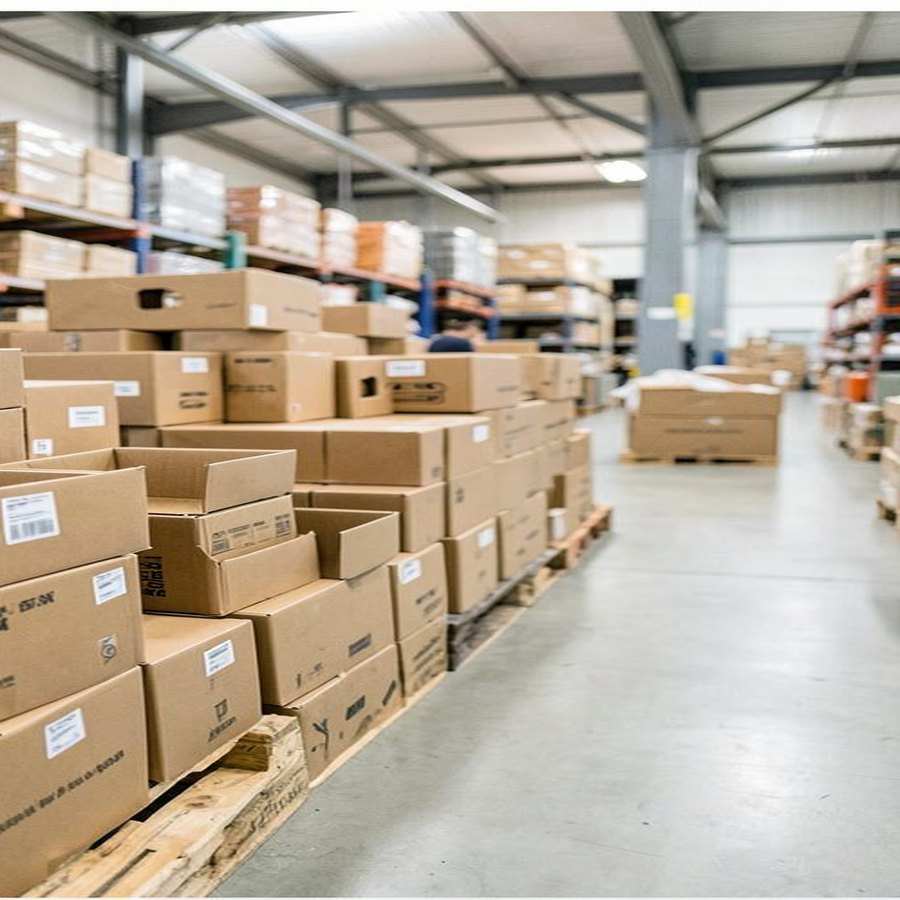
At delivery:
- Compare shipment identifiers and visible pallet counts with the paperwork.
- Photograph the load before removing wrapping or moving merchandise.
- Record visible crushed cartons, leaning stacks, torn wrap or other external damage.
- Describe observed discrepancies on the delivery receipt before signing where applicable; avoid vague notes.
- Retain copies of signed documents and promptly report concerns through the required process.
After unloading, count and sort merchandise in a controlled area. Preserve labels, packaging and relevant serial numbers. Separate external transit damage from ordinary as-is merchandise issues such as missing accessories, wear or nonfunctioning items.
All merchandise is sold as-is for resale. Do not assume ordinary retail returns, exchanges or manufacturer warranty coverage apply. Review the returns, refunds and claims policy before buying for applicable eligibility, evidence requirements and deadlines; do not assume a particular claim window or remedy.
If an issue occurs, provide the order number, affected quantities, photographs and a clear description. Delivery notes support documentation but do not independently guarantee a remedy. Follow instructions about retaining goods and packaging rather than discarding or sending anything back without authorization.
8. Avoid common buying and processing mistakes
The most expensive mistakes often begin before checkout:
- Buying from reference retail totals instead of item-level information.
- Treating a condition grade as proof that every item works.
- Confusing pallet count, carton count and individual unit count.
- Ignoring duplicate inventory that may take longer to sell.
- Underestimating testing, cleaning, photography and listing labor.
- Committing all available cash to inventory and leaving no processing reserve.
- Assuming branded merchandise is automatically eligible for every marketplace.
Once inventory arrives, create separate areas for uninspected, tested, incomplete, repairable and unsuitable items. Record your actual usable count and processing time, then compare them with your pre-purchase assumptions.
Do not list products as new or fully functional without supporting inspection. Check recalls before resale, and handle personal data, damaged batteries and unsafe products appropriately. The step-by-step guide to buying liquidation pallets can help turn these checks into a consistent purchasing routine.
Frequently asked questions
Are Amazon return pallets all customer returns?
The listing should identify the inventory stream. Liquidation offerings can include customer returns, overstock, shelf pulls or mixed inventory, so the retailer name alone does not establish the composition.
Does a manifest guarantee working merchandise?
No. A manifest is an inventory record, and functionality depends on any explicit testing information provided. Check its quantity basis, condition notes and stated limitations before using it for purchasing calculations.
Is shipping included in the listed price?
Yes. Free shipping is PalletCove's only delivery option on every order to all 48 contiguous states, and freight is included in the listed price. Handling takes 1–3 business days after payment clears, with transit typically 3–7 business days from Dallas.
Do I need a resale certificate?
Requirements depend on your business, jurisdiction and the transaction. Keep a valid resale certificate available where applicable and confirm required documentation before ordering. PalletCove covers sales tax on qualifying orders.
Can I return items that do not work?
All merchandise is sold as-is for resale, so nonworking inventory does not automatically qualify for a return or refund. Review the applicable policy before paying and promptly document any issue that may fall within its claim provisions.
Talk to PalletCove Liquidation
Before choosing a pallet or truckload, gather your questions about the manifest, condition grade, quantities and receiving setup. PalletCove Liquidation LLC can help clarify listing details so you can assess whether a load fits your operation.
- Address: 4820 Cove Industrial Blvd, Dallas, TX 75236
- Phone: (713) 819-3904
- Email: sales@palletcoveliquidation.com
- Hours: Mon–Fri 8:00 AM – 6:00 PM CT, Sat 9:00 AM – 2:00 PM CT, Sun closed
To discuss an order, contact our order desk, or review current inventory and evaluate the details of the load before you buy.