
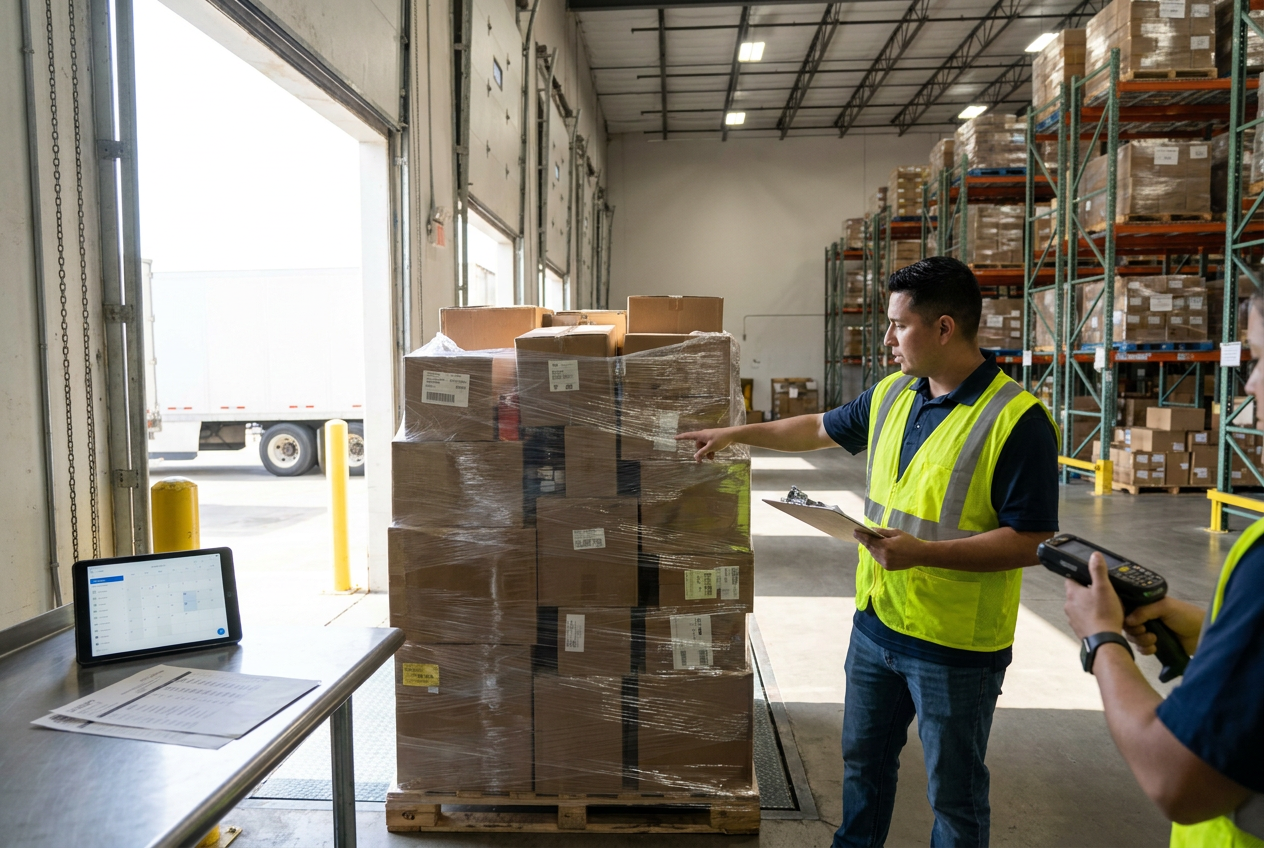
Liquidation pallet delivery time has two main parts: warehouse handling and freight transit. At PalletCove Liquidation, handling takes 1–3 business days after payment clears, and transit from Dallas typically takes another 3–7 business days. Together, those windows provide a baseline of approximately 4–10 business days after cleared payment—not a guaranteed arrival date.
Free shipping is the only delivery option on every order to all 48 contiguous states, and freight is included in the listed price. Whether you are buying your first liquidation pallet or scheduling a full truckload, the practical questions are when payment clears, when the shipment leaves Dallas, and when your receiving location can accept it.
This guide explains how to plan around those milestones, interpret inventory descriptions, prepare for an appointment, and document delivery issues without confusing as-is merchandise condition with transportation damage.
How liquidation pallet delivery time is calculated
Handling time begins after payment clears, not when you first submit an order or initiate a transfer. It covers the preparation period before freight moves. Transit time covers transportation from Dallas toward the destination; it is separate from handling and may involve terminal transfers and final-delivery scheduling.
| Milestone | Timing or meaning | What the reseller should do |
|---|---|---|
| --- | --- | --- |
| Payment clearance | Depends on payment processing | Confirm clearance rather than assuming submission starts handling |
| Handling | 1–3 business days after clearance | Keep destination and receiving details accurate |
| Transit from Dallas | Typically 3–7 business days | Monitor shipment updates and remain reachable |
| Delivery appointment | Coordinated around carrier and receiver availability | Confirm the receiving date, window, and unloading arrangement |
| Arrival and inspection | At the receiving location | Compare the shipment with documents and record exceptions |
Business days are not calendar days. Weekends and holidays can extend elapsed time, and a late-week payment clearance may put much of the handling period into the following week. Bank processing schedules can also affect when the handling clock starts.
For example, if payment clears on a Monday with no intervening holidays, count handling first and transit afterward. Do not count the same day as both a full handling day and a full transit day just to produce an earlier estimate. Ask for the shipment-specific status before committing staff or promising customers inventory availability.
Key takeaway: Plan around 1–3 business days of handling plus typically 3–7 business days of transit, then confirm the delivery appointment before treating the arrival date as settled.
The free shipping policy is the reference for delivery terms. A tracking estimate is useful for planning, but it is not the same as a confirmed receiving appointment.
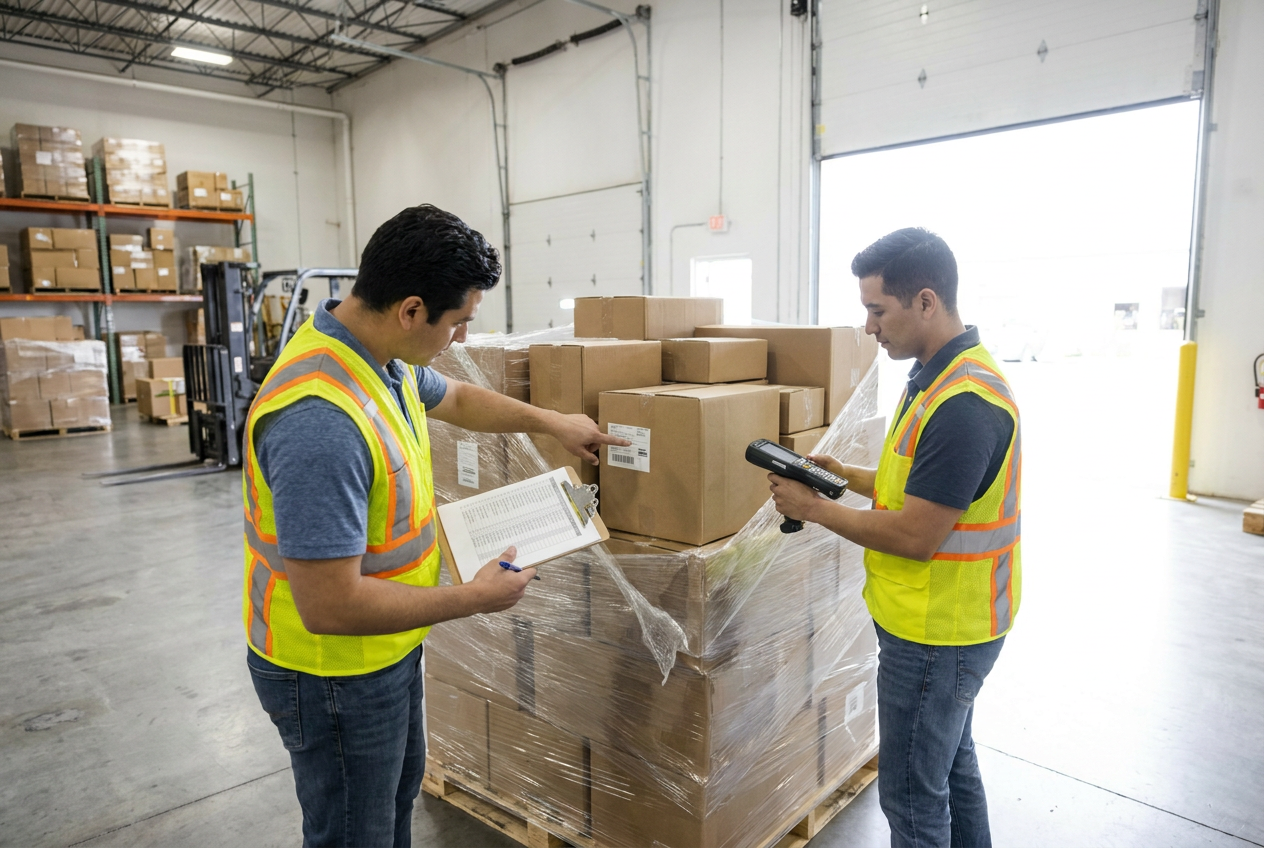
Pallet, LTL, and full truckload shipments
A liquidation pallet is a bulk unit of merchandise assembled for wholesale resale. A truckload is a larger purchase that can occupy a full trailer. These terms describe shipment scale, not a uniform number of saleable products or a guaranteed condition.
LTL means less-than-truckload freight. In general freight operations, LTL shipments share trailer space with other shipments and may pass through multiple terminals. Full-trailer movements typically involve fewer transfers, but they still depend on equipment availability, road conditions, and receiving schedules. Neither format automatically guarantees an earlier delivery.
Explore liquidation pallets for resale for pallet-level options and the truckload inventory category for larger loads. The types of liquidation pallets guide explains inventory formats, while the truckload buying guide helps frame larger receiving commitments.
Before buying, establish:
- The advertised shipment unit: individual pallet, multiple pallets, or truckload.
- Available pallet count, dimensions, weight, and loading details.
- Whether your location can safely accept the expected trailer or vehicle.
- The unloading equipment, staff, and space you need available.
Do not assume every truckload contains the same pallet count. Bulky products, uneven dimensions, and load configuration affect trailer capacity and unloading work.
Manifests and condition grades: what arrives versus when
A manifest is an inventory record that may identify products, quantities, descriptions, or other listing details. A manifested load provides item-level information to review; a category-level load describes a broader merchandise grouping without necessarily providing the same itemized detail. Neither format makes transit faster by itself.
Condition grades describe the merchandise, not delivery speed. Definitions can differ between listings and suppliers, so read the specific description rather than treating a grade name as a universal standard.
| Description | General meaning | Receiving and planning implication |
|---|---|---|
| --- | --- | --- |
| Customer returns | Merchandise previously returned by purchasers | Allow time for sorting, testing, and checking completeness |
| Overstock | Excess inventory removed from a sales channel | Verify the stated condition and packaging details |
| Shelf pulls | Merchandise removed from retail display or shelves | Expect to assess labels, packaging, and handling wear |
| Salvage | Merchandise intended for recovery, repair, or parts under the listing description | Plan for evaluation and appropriate disposition |
All PalletCove merchandise is sold as-is for resale. A category name, manifest entry, or condition grade is not a promise that every item works, is complete, or is ready to list immediately.
When comparing general merchandise liquidation loads, distinguish assortment information from shipment information. For example, review the actual descriptions of the Amazon General Merchandise Truckload and Macy’s Textile Truckload rather than inferring identical contents, packaging, or receiving requirements from their names. Confirm current availability and load details before ordering.
PalletCove is an independent reseller and is not affiliated with, endorsed by, or sponsored by any retailer named. Retailer references identify inventory descriptions, not a partnership or condition guarantee.
Pricing, payment, and ordering without avoidable delays
Freight is included in the listed price. Free shipping is the only delivery option on every order throughout the 48 contiguous states; there is no separate delivery tier to choose. PalletCove also covers sales tax on qualifying orders.
That pricing structure does not turn a wholesale purchase into a forecast of resale results. Evaluate the listed price alongside the inventory description and your own sorting, storage, testing, and resale requirements. Do not treat a manifest as a guaranteed resale valuation.
PalletCove accepts credit/debit card, ACH bank transfer, and domestic bank wire. Payment processing and clearance are distinct from warehouse handling. If timing matters, ask when your payment has cleared rather than assuming a bank transfer initiation notice is sufficient.
Use this ordering sequence:
- Review the listing, condition grade, manifest availability, and quantity offered.
- Confirm that the load suits your storage capacity and receiving equipment.
- Provide the complete delivery address, business name if applicable, and a reliable receiving contact.
- Clarify any qualifying-order or resale certificate documentation requirements before completion. A resale certificate concerns tax documentation; it does not establish delivery priority.
- Submit payment using an accepted method and confirm clearance.
- Track handling, shipment departure, and appointment scheduling as separate milestones.
Save the listing and order documents available at purchase. Those records give you a useful reference when the shipment arrives and you begin reconciling quantities and descriptions.
Appointments and factors that change an estimated arrival
Distance matters, but it is not the only factor affecting delivery. Carrier routing, terminal schedules, weather, traffic disruption, holidays, equipment availability, and local receiving access can all influence the estimated arrival date.
A nearby destination should not be treated as guaranteed next-day delivery. Buyers comparing liquidation pallets in Texas with liquidation pallets in Florida should use the same published handling and typical transit windows as their starting point, then confirm shipment-specific details.
Information to confirm before dispatch
Provide a working phone number and disclose whether the destination is a warehouse, storefront, residence, or another location. Explain receiving hours, gated access, vehicle restrictions, and whether a loading dock or suitable unloading equipment is available. Ask the order desk to confirm that the proposed receiving arrangement is suitable before the shipment leaves.
Do not assume unloading equipment or inside placement is included simply because shipping is free. Establish how the freight will move safely from the delivery vehicle into your receiving area, and who will perform each step.
Tracking updates versus appointment confirmation
Freight tracking may show departure, terminal arrival, or an estimated delivery date. A shipment reaching a destination terminal does not necessarily mean it will reach your address that same day. Final routing and appointment availability may still need coordination.
Answer scheduling calls promptly and confirm the delivery window with the carrier. If tracking stops changing or an expected milestone passes, request a status check rather than assuming the freight is lost. Avoid changing the destination after dispatch unless necessary; address changes can complicate routing and scheduling.
Delivery-day inspection, returns, and claims
Prepare a clear receiving area before the truck arrives. Have your order records, shipment paperwork, camera, and receiving staff ready. The liquidation truckload receiving checklist provides a companion workflow for larger deliveries.

At arrival:
- Compare the delivery address, shipment reference, and visible pallet count with the freight documents.
- Inspect accessible exterior surfaces for crushed cartons, torn wrap, leaning stacks, moisture, or other visible damage.
- Photograph the load before unloading when safe, and record any visible seal information where applicable.
- Describe observable shortages or damage on the delivery receipt before signing. Be specific rather than writing only a vague concern.
- Keep copies of signed documents and begin a more detailed inventory review after safe unloading.
A driver may not be able to remain while you open and test every item. Exterior inspection at delivery and item-level inspection afterward serve different purposes. Avoid signing a clean receipt when visible exceptions are present, and ask for guidance before refusing a shipment.
As-is merchandise condition is different from a potential transportation problem. A returned item that needs testing is not automatically evidence of freight damage; a crushed pallet observed at arrival warrants careful documentation.
Review the returns and claims terms before purchase. Do not assume a return, refund, replacement, or claim approval is available. Report concerns promptly with the order number, delivery date, photographs, paperwork, and a clear description; ask which deadlines and procedures apply. Retain relevant packaging while seeking instructions.
Common planning mistakes to avoid
The biggest scheduling errors usually come from treating estimates as commitments or overlooking work after arrival.
- Starting the clock at checkout: Handling starts after payment clears.
- Counting only transit: The typical 3–7 business days does not replace the separate handling period.
- Counting weekends as business days: Calendar planning needs room for nonworking days and holidays.
- Ignoring appointment calls: An unreachable receiver can delay final coordination.
- Assuming every destination is equally accessible: Verify vehicle access and unloading arrangements early.
- Treating a manifest as a condition guarantee: Use it for comparison within the listing’s stated terms.
- Scheduling sales immediately after estimated arrival: Leave time for unloading, reconciliation, testing, and listing preparation.
For repeat buying, record payment clearance, dispatch, appointment confirmation, and actual arrival separately. Your own receiving history can improve planning without turning previous delivery times into promises for future orders.
Frequently asked questions
What is the typical liquidation pallet delivery time from Dallas?
Handling takes 1–3 business days after payment clears, followed by typically 3–7 business days in transit from Dallas. That creates a baseline of approximately 4–10 business days, subject to scheduling and transportation conditions. It is not a guaranteed delivery date.
Is free shipping available on every order?
Yes. Free shipping is the only delivery option on every order to all 48 contiguous states, and freight is included in the listed price. Confirm receiving access and unloading arrangements before dispatch.
Does a full truckload always arrive faster than LTL?
No. Full-trailer movements may involve fewer transfers, but equipment availability, routing, and appointments still affect arrival. Use the published timing windows and request details for your particular shipment.
Does paying by bank wire start handling immediately?
Handling begins after payment clears, not merely after a wire is initiated. Accepted methods are credit/debit card, ACH bank transfer, and domestic bank wire. Confirm clearance before calculating the handling window.
What should I do if pallets arrive damaged or short?
Document visible issues, record specific exceptions on the delivery receipt, and retain photographs and paperwork. Report the concern promptly and follow the applicable policy instructions. All merchandise is sold as-is for resale, and documentation does not guarantee a particular claim outcome.
Talk to PalletCove Liquidation
Before ordering, have your destination ZIP code, load choice, receiving hours, and unloading details ready. For help confirming the next steps, contact our order desk or review current inventory.
- Business: PalletCove Liquidation LLC
- Address: 4820 Cove Industrial Blvd, Dallas, TX 75236
- Phone: (713) 819-3904
- Email: sales@palletcoveliquidation.com
- Hours: Mon–Fri 8:00 AM – 6:00 PM CT, Sat 9:00 AM – 2:00 PM CT, Sun closed