
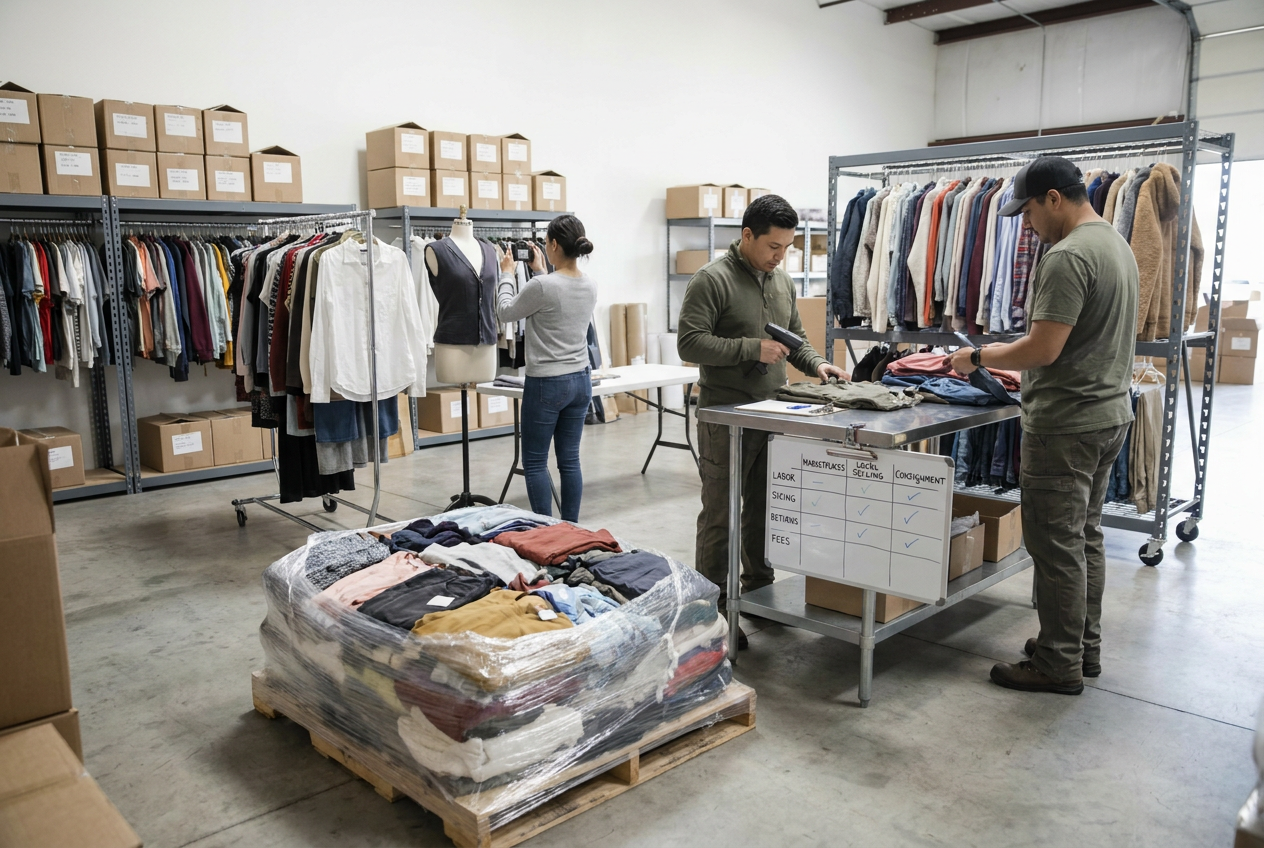
Choosing where to sell liquidation clothing starts with the garments, not the platform. A recognizable jacket with readable labels deserves a different sales process from an unbranded basic, an incomplete outfit, or a garment with an undisclosed stain. The right channel depends on how much information you can provide and how much work each sale can support.
For independent resellers, the practical choice is usually a mix: individually list selected pieces, group compatible basics into bundles, and use local selling or consignment where the inventory fits. For the broader sourcing process, start with our guide to buying liquidation pallets; this article focuses on choosing sales channels after accounting for apparel-specific labor and risk.
Why apparel needs a different strategy than tools
A tool buyer often starts with model number, function, compatibility, and completeness. A clothing buyer also needs fit, fabric, cut, color, season, and condition. Two garments carrying the same size can fit differently, and an intact tag does not establish that a returned garment is unworn.
An online marketplace is a platform where independent sellers offer products to buyers. Its search tools can connect a distinctive garment with a specific shopper, but that reach comes with photography, measurement, messaging, and order-management work. Tools also require condition checks and accurate descriptions; apparel adds substantial fit-related uncertainty.
Sorting means separating inventory into useful groups by attributes such as condition, size, garment type, and sales channel. Your pricing strategy is the method used to set asking prices, bundle discounts, and markdowns around demand, costs, and stock age—not merely a markup on acquisition cost.
Route clothing by information quality and handling effort, not just by brand or original ticket price.
Compare marketplaces, local selling, and consignment
A flea market is a venue where independent vendors sell from temporary stalls or spaces. A bin store is a retail format that displays merchandise in bins, often using scheduled price reductions. Both can reduce item-by-item listing work, but neither eliminates sorting, merchandising, or customer service.
| Channel | Best inventory fit | Listing and selling labor | Sizing information | Fees and returns considerations |
|---|---|---|---|---|
| --- | --- | --- | --- | --- |
| eBay or another broad marketplace | Searchable brands, styles, and distinctive pieces | Individual photos, attributes, descriptions, packing, and messages | Tagged size plus relevant measurements | Check category fees, optional promotion costs, and applicable buyer protections |
| Poshmark or another fashion-focused marketplace | Presentable apparel suited to the platform's audience | Styling, measurements, offers, and closet maintenance | Size, cut, fabric, and fit details | Check current commission, shipping rules, and case procedures |
| Local marketplace pickup | Size-based bundles and lower-value individual pieces | Fewer shipping tasks, but appointment and messaging work | Clear size range and inspection opportunity | Platform or payment fees depend on transaction method; disclose terms before payment |
| Flea market or pop-up | Seasonal basics, bundles, and varied everyday stock | Transport, setup, staffing, and pack-down | Organized size sections and measurements when needed | Stall rent, permits where required, payment costs, and applicable consumer rules |
| Bin store | Lower-priced, safe, accurately represented merchandise | Bulk merchandising, replenishment, and floor management | Visible labels and separated size groups help | Premises and staffing costs; return terms must be clear and lawful |
| Consignment | Select pieces accepted by a shop's audience | Intake preparation and tracking; shop handles selling | Shop intake standards govern | Commission, markdown authority, payout timing, and unsold-item terms vary |
Fees change, so verify the current schedule before committing inventory. An apparently inexpensive channel can become costly when slow appointments, repeated offers, storage, or returns consume time.
For deeper platform-specific guidance, use our articles on selling liquidation clothing on Poshmark and selling liquidation through Facebook Marketplace. Treat those as workflow references rather than reasons to send every garment to the same platform.
Match load types and condition to your channels
A liquidation pallet is a bulk unit of inventory sold for resale; a truckload is a larger shipment typically organized around a full trailer. Category-level apparel inventory can still contain a difficult mix of sizes, seasons, and conditions. Review liquidation pallet types and differences before assuming a category name describes every item.
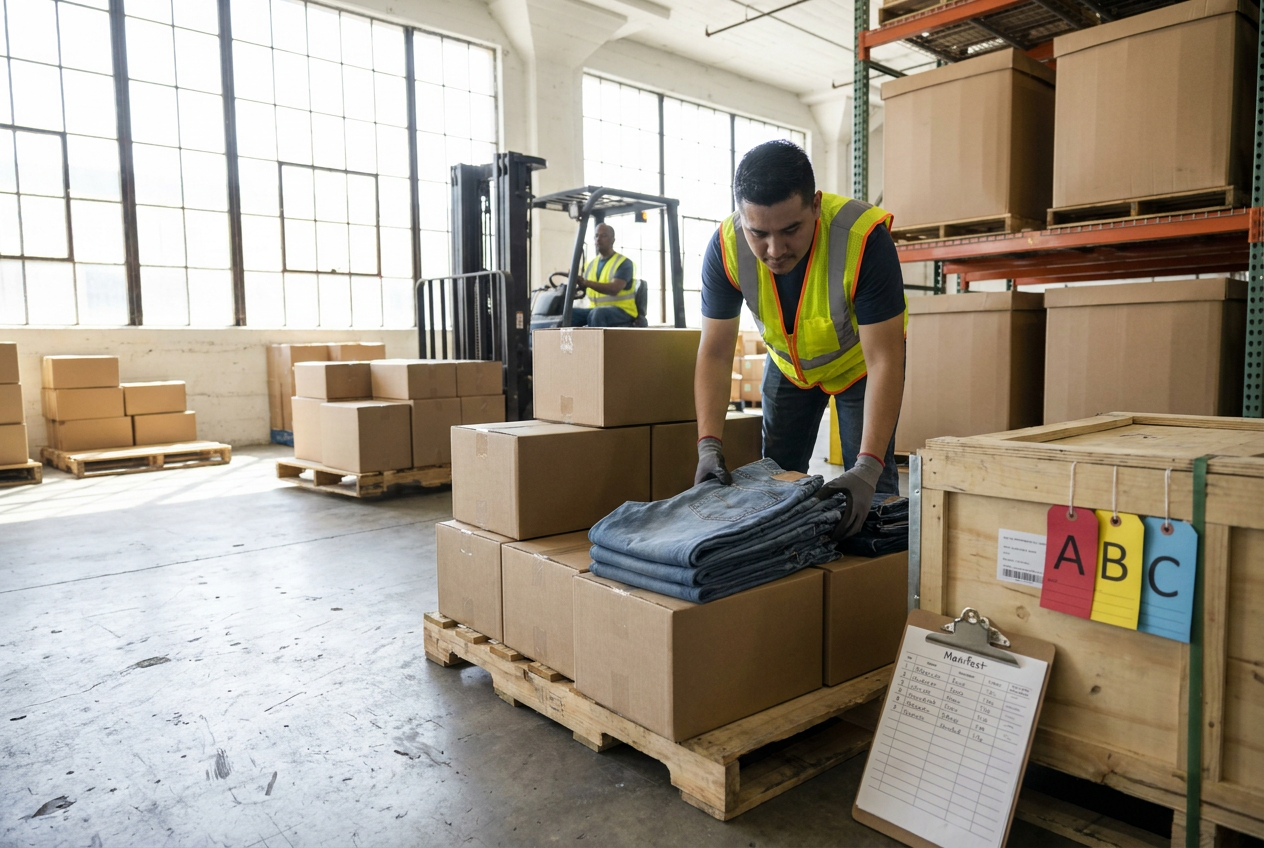
A manifest is an inventory document describing the lot, sometimes including item descriptions, quantities, or identifiers. Ask which details are available and whether counts are estimates or verified. A manifest is not a substitute for garment inspection, and original retail figures do not establish current resale value.
A condition grade is the seller's stated classification of merchandise. Definitions vary, so use the actual listing:
- Overstock: Excess inventory; do not automatically describe it as new.
- Shelf pulls: Merchandise removed from selling displays, potentially with handling or packaging wear.
- Customer returns: Previously returned goods that may have fit issues, wear, damage, or missing components.
- Salvage: Inventory requiring substantial evaluation, repair, component recovery, or another appropriate disposition.
- As-is: A sale description that requires careful reading of disclosed condition and applicable terms, not a universal waiver of every obligation.
Use the liquidation pallets inventory hub to orient your search. The Macy's inventory category and truckload inventory category offer relevant browsing routes, but category labels do not verify clothing content or condition.
Likewise, compare the actual descriptions of the Macy's Textile Truckload and Shoes Truckload. Textiles are not necessarily garments, and footwear introduces separate size, pairing, and wear checks. PalletCove is an independent reseller and is not affiliated with, endorsed by, or sponsored by any retailer named.
Build an apparel listing and routing standard
Start with inspection before photography. Check seams, closures, lining, hems, odors, discoloration, missing labels, and missing pieces. Screen for safety concerns and applicable recalls before offering merchandise; do not treat donation as a workaround for unsafe stock.
Use a consistent sequence:
- Identify: Record garment type, readable brand, tagged size, material label, and internal stock code.
- Inspect: Separate sale-ready pieces, items needing reasonable cleaning or repair, and items unsuitable for sale.
- Measure: Use garment-specific measurements, such as chest width and length for tops or waist and inseam for trousers.
- Photograph: Show front, back, labels, distinguishing features, and every material flaw.
- Route: Assign individual listings, coherent bundles, local racks, or consignment candidates.
- Store: Connect each listing or bundle to a retrievable storage location.
State how measurements were taken, such as laid flat without stretching. Distinguish tagged size from your measurements rather than silently replacing the label size. Avoid personal fit guarantees and unsupported claims about authenticity or materials.
Bundle by a useful buyer need: compatible size, season, garment type, and condition. A miscellaneous bag may reduce listing effort but create more questions and dissatisfaction. Starting a bin store, selling at flea markets, and building an online marketplace listing workflow each require separate operating plans; the routing decision comes first.
Compare costs before setting prices
Calculate expected proceeds using realistic completed-sale evidence where available, not just active asking prices. Keep inventory acquisition separate from channel costs so you can see what the selling method contributes.
Channel contribution = collected selling revenue − allocated acquisition cost − selling fees − seller-paid outbound shipping − packaging − preparation and selling labor − return-related costs.
PalletCove's listed purchase price includes freight. Outbound shipping in this calculation means any shipping you pay when sending individual orders to your own customers, not an additional PalletCove delivery charge.
For a hypothetical $24 garment, allocating $5 to acquisition, $4 to selling fees, $1 to packaging, and $6 to labor leaves $8 before any seller-paid shipping, return costs, and overhead. These figures illustrate arithmetic, not platform rates or expected results. Bundling may lower handling cost per garment while also lowering the selling price per piece.
For consignment, obtain written answers about the shop's share, cleaning charges, markdown authority, payout schedule, loss or damage responsibility, and unsold-item retrieval. Compare the amount you actually receive—not the shop's display price—with other channels.
Set review dates for aging inventory. Track sales by size, season, condition, and channel before scaling from pallets to truckloads. More volume multiplies storage and processing demands as well as potential sales opportunities.
Order, receive, and document inventory carefully
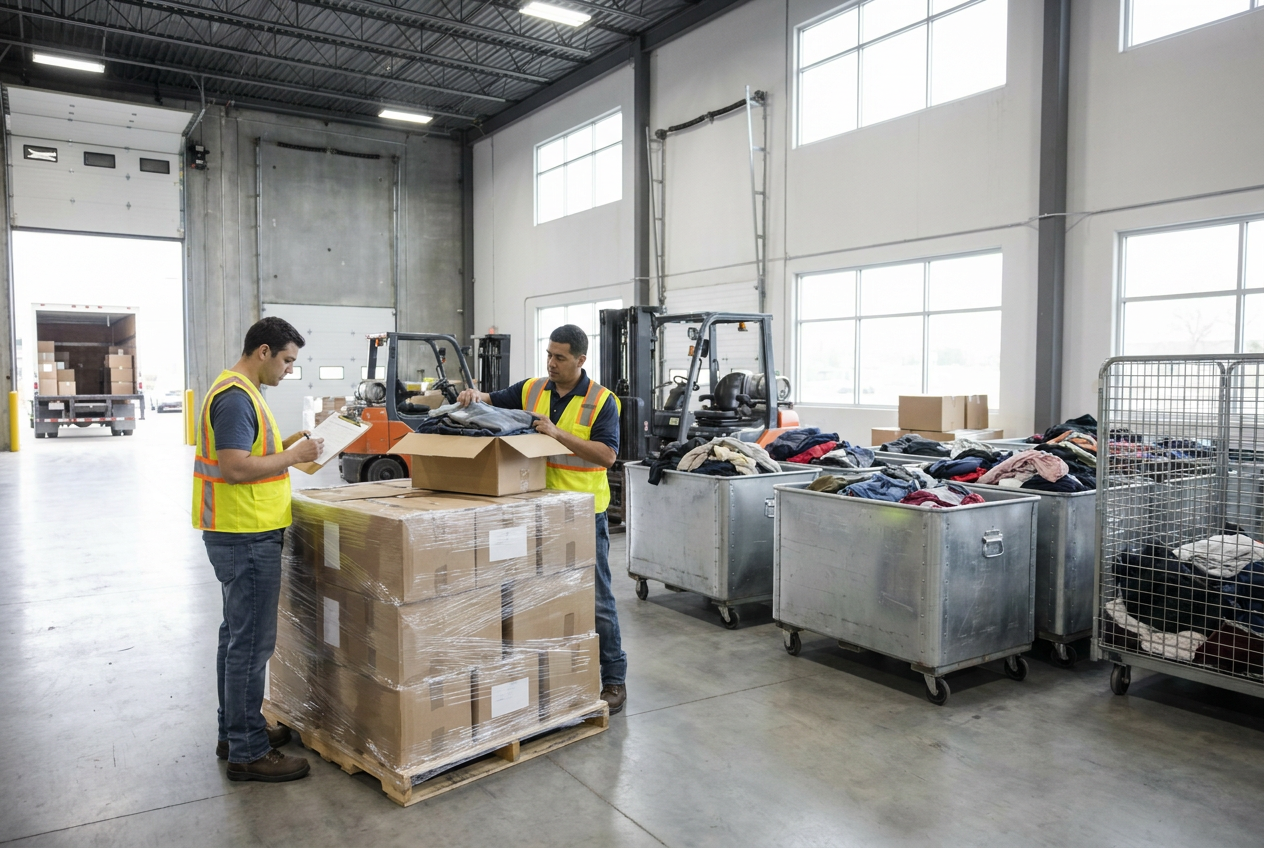
Before ordering, confirm the listed condition, available manifest, lot scope, and whether your receiving location can accommodate the shipment. Pallet shipments may travel by LTL, meaning less-than-truckload freight; full trailer shipments require appropriate receiving arrangements. Confirm the setup rather than assuming a particular unloading service.
PalletCove offers free shipping as the only delivery option on every order to all 48 contiguous states; freight is included in the listed price. Buyers comparing liquidation pallets in Texas and liquidation pallets in Florida have that same shipping inclusion.
Handling takes 1–3 business days after payment clears. Transit is typically 3–7 business days from Dallas, for an estimated 4–10 business days total. The processing cutoff is 2:00 PM Central Time, America/Chicago, Monday–Friday; after-cutoff confirmations begin the next business day. Weekends and applicable holidays do not count.
Use the payment methods shown at checkout: card via a secure payment link, ACH, bank wire, and listed payment apps. Valid resale certificates are reviewed and applied where the buyer's state allows.
On delivery day, photograph the shipment before unpacking, document visible damage, retain labels and packaging, and compare received inventory with available documents. Keep affected goods identifiable while any issue is reviewed.
Under PalletCove's United States Refund & Returns Policy, products explicitly listed as NEW ONLY qualify for defective and non-defective returns and exchanges within 30 calendar days of delivery. Returns are by mail; customers are responsible for the return label and shipping, and a 15% restocking fee applies to the product price. Refund processing takes 10 calendar days after authorized return receipt and inspection, or approval where no physical return is required.
Mixed and used loads have separate claims terms, not routine change-of-mind returns. Please report delivery issues within 48 hours; that request does not shorten eligible new-product 30-day returns.
Avoid the mistakes that create apparel losses
Your supplier's returns policy and your customer-facing selling policy are separate. Publish accurate terms for your own transactions, while following applicable law and platform protections. A posted restriction does not necessarily defeat a claim that an item was materially misdescribed.
Common mistakes include:
- Listing every basic individually without measuring handling time.
- Treating tags, packaging, or a retailer name as proof of condition.
- Hiding flaws or substituting vague phrases for measurements.
- Buying heavily into one size or season without a fallback channel.
- Ignoring consignment pickup deadlines and markdown terms.
- Letting rejected stock accumulate without a plan for repair, suitable textile recovery, or lawful disposal.
Sorting and pricing inventory, handling unsellable items, and tracking channel results should be repeatable processes. Record why a garment was returned or rejected so the next buying decision improves.
Frequently asked questions
Where should I sell liquidation clothing first?
Start with the channel that fits your strongest inventory and available labor. Searchable individual pieces suit online listings, while coherent everyday bundles may fit local buyers better.
Do I need measurements if the size label is readable?
Measurements reduce uncertainty because tagged sizes vary across cuts and brands. Provide relevant measurements and explain your method without guaranteeing fit.
Is consignment easier than selling online?
It can reduce photography, messaging, and fulfillment work, but shops may reject items or impose seasonal intake limits. Compare commission, payout timing, and unsold-item obligations before choosing it.
Can customer returns be sold as new clothing?
Do not infer new condition from the source label or attached tags. Inspect each garment and describe its actual condition under the rules of your selling channel.
Should I buy a truckload for an untested sales channel?
First establish how quickly you can inspect, prepare, store, and sell the relevant size and condition mix. A smaller operational test can expose bottlenecks before a full trailer amplifies them.
Talk to PalletCove Liquidation
Choose channels around fit information, condition, labor, and customer expectations. Return to our liquidation pallet buying guide for the broader sourcing framework, then review current inventory or contact our order desk about a specific listing.
PalletCove Liquidation LLC
4820 Cove Industrial Blvd, Dallas, TX 75236
Phone: (713) 819-3904
Email: sales@palletcoveliquidation.com
Hours: Mon–Fri 8:00 AM – 6:00 PM CT, Sat 9:00 AM – 2:00 PM CT, Sun closed.